
Static GK – General Knowledge for Competitive Exams
Latest posts and quizzes curated for the Static GK track.
Latest Posts & Quizzes
Page 2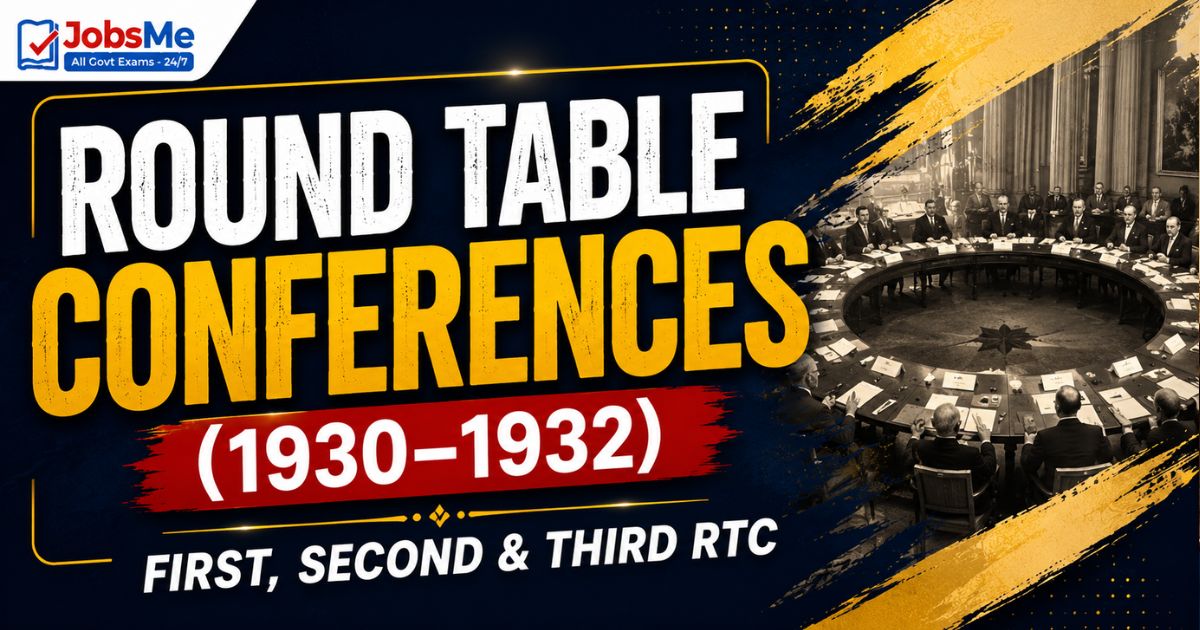
Round Table Conferences (1930–1932) – First, Second & Third RTC – Static GK & General Awareness for Competitive Exams with Memory Tricks
This article covers the three Round Table Conferences (1930–1932) held in London between the British Government and Indian leaders to discuss constitutional reforms for India. It explains the dates, venue, chairman, key participants, agenda, major events like the Gandhi-Irwin Pact and the Communal Award, and the outcomes of each conference, including how the recommendations led to the Government of India Act 1935. All facts are arranged in exam-ready format with tables, memory tricks, and one-liners to help UPSC, SSC, IBPS, RRB, PSU, and State PCS aspirants score better in Modern History and General Awareness sections.
List of British Acts in India (1773–1947) – Static GK & General Awareness for Competitive Exams with Memory Tricks
This article presents a complete, exam-ready list of all major British Acts passed in India from the Regulating Act of 1773 to the Indian Independence Act of 1947, covering the East India Company Acts, Charter Acts, Government of India Acts, and Indian Councils Acts along with their key provisions and significance. It explains landmark laws such as the Regulating Act 1773, Pitt's India Act 1784, the Charter Acts of 1813, 1833 and 1853, the Government of India Act 1858, the Morley-Minto Reforms of 1909, the Montagu-Chelmsford Reforms of 1919, and the Government of India Act 1935, with memory tricks and one-liners for quick revision. All facts are arranged to help UPSC, SSC, IBPS, RRB, PSU, and State PCS aspirants score better in General Awareness, Polity, and Modern History sections.
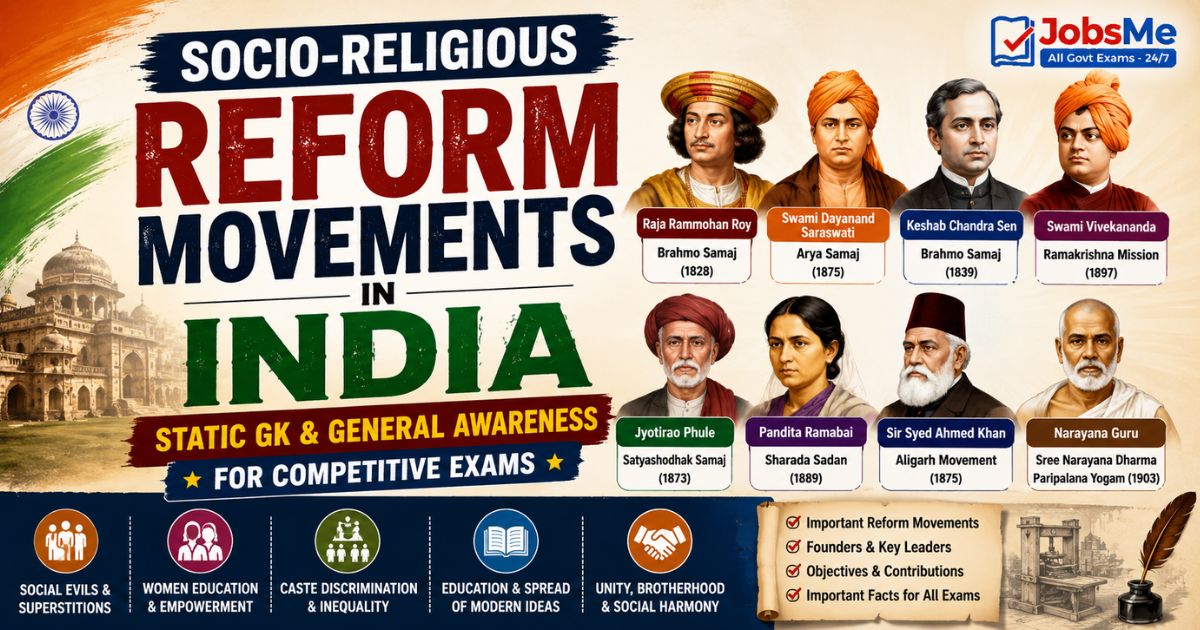
Socio-Religious Reform Movements in India – Static GK & General Awareness for Competitive Exams with Memory Tricks
This article presents a complete list of the major socio-religious reform movements of 19th and early 20th century India, covering Hindu, Muslim, Sikh, Parsi, and regional anti-caste reform movements along with their founders, founding years, headquarters, and key contributions. It includes landmark movements like the Brahmo Samaj (Raja Ram Mohan Roy), Arya Samaj (Swami Dayananda Saraswati), Ramakrishna Mission (Swami Vivekananda), Aligarh Movement (Sir Syed Ahmad Khan), and Satyashodhak Samaj (Jyotirao Phule), with memory tricks, a year-wise timeline, and one-liners for quick revision. All facts are arranged in exam-ready format to help UPSC, SSC, IBPS, RRB, PSU, and State PCS aspirants score better in General Awareness and Modern History sections.
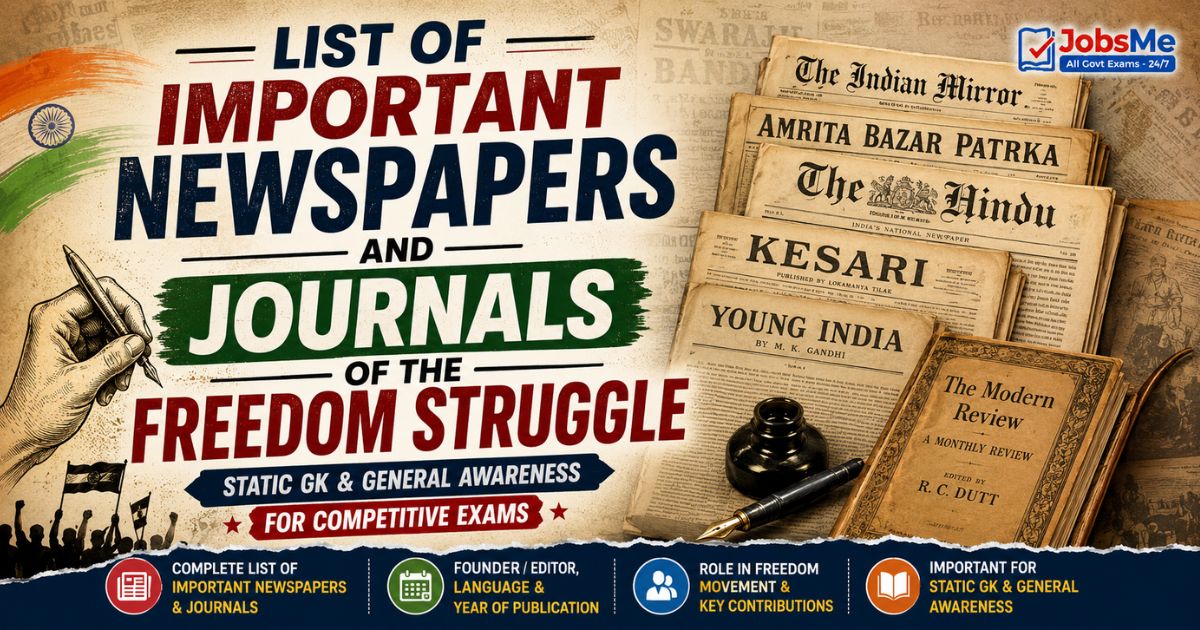
List of Important Newspapers and Journals of the Freedom Struggle – Static GK & General Awareness for Competitive Exams with Founders and Memory Tricks
This article presents a complete, exam-ready list of important newspapers and journals published during the Indian freedom struggle, along with their founders, languages, and year of publication. It covers landmark publications such as the Bengal Gazette (India's first newspaper), Kesari and Mahratta by Bal Gangadhar Tilak, Young India and Harijan by Mahatma Gandhi, Amrita Bazar Patrika, The Hindu, Al-Hilal by Abul Kalam Azad, and Mook Nayak by Dr. B. R. Ambedkar, with memory tricks and one-liners for quick revision. All facts are arranged in a structured format to help UPSC, SSC, IBPS, RRB, PSU, and State PCS aspirants score better in General Awareness and Modern History sections.
European Arrival in India – Advent of Europeans: Static GK & General Awareness for Competitive Exams with Memory Tricks
This article presents a complete account of the European arrival in India, covering the Portuguese, Dutch, English, Danish, and French trading companies along with their dates of arrival, founders, key settlements, important governors, and the battles that decided European supremacy. It includes landmark facts like Vasco da Gama reaching Calicut in 1498, the Portuguese capture of Goa in 1510, the founding of the English East India Company in 1600, and the Battle of Plassey in 1757, with memory tricks and one-liners for quick revision. All facts are arranged in exam-ready format to help UPSC, SSC, IBPS, RRB, PSU, and State PCS aspirants score better in General Awareness and Modern History sections.
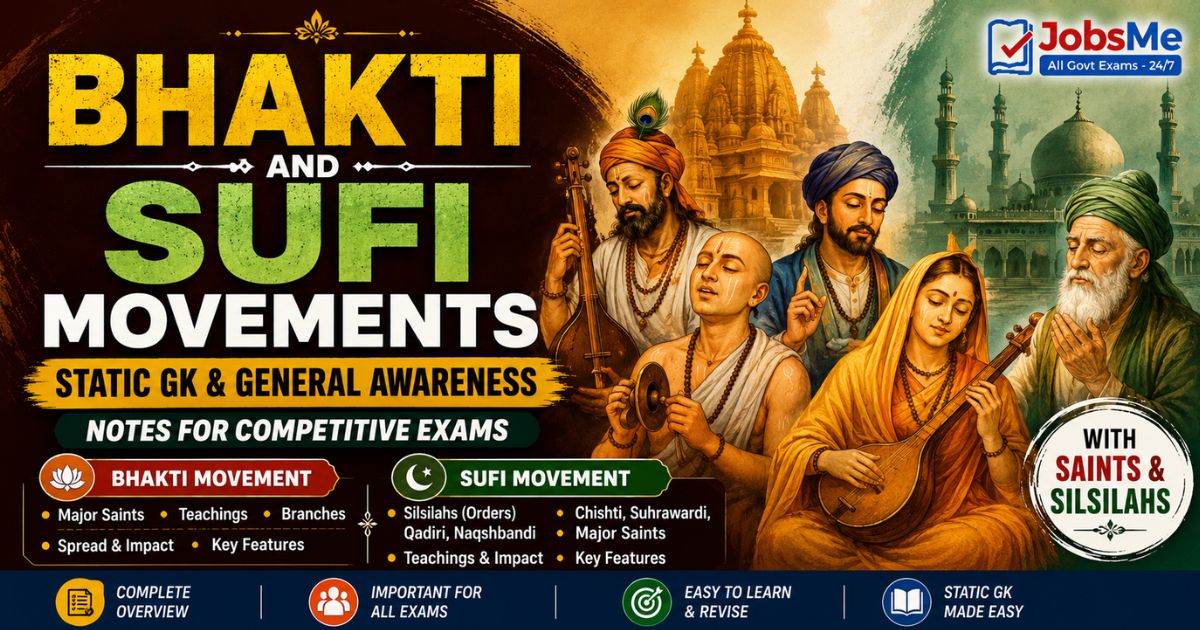
Bhakti and Sufi Movements – Static GK & General Awareness Notes for Competitive Exams with Saints, Silsilahs and Memory Tricks
This article presents complete, exam-ready notes on the Bhakti and Sufi Movements of medieval India, covering the Saguna and Nirguna schools, the Alvar and Nayanar saints of the South, the regional Bhakti saints of Maharashtra, Bengal, Assam and the North, and the major Sufi silsilahs such as Chishti, Suhrawardi, Qadiri, Naqshbandi and Firdausi along with their founders and famous saints. It includes the key works, regions, philosophies and nicknames of important figures like Kabir, Guru Nanak, Mirabai, Tulsidas, Chaitanya, Ramananda, Khwaja Moinuddin Chishti, Nizamuddin Auliya and Amir Khusrau, with memory tricks and one-liners for quick revision. All facts are arranged in a structured format to help UPSC, SSC, IBPS, RRB, PSU, Insurance and State PCS aspirants score better in General Awareness, Art and Culture, and Medieval History sections.
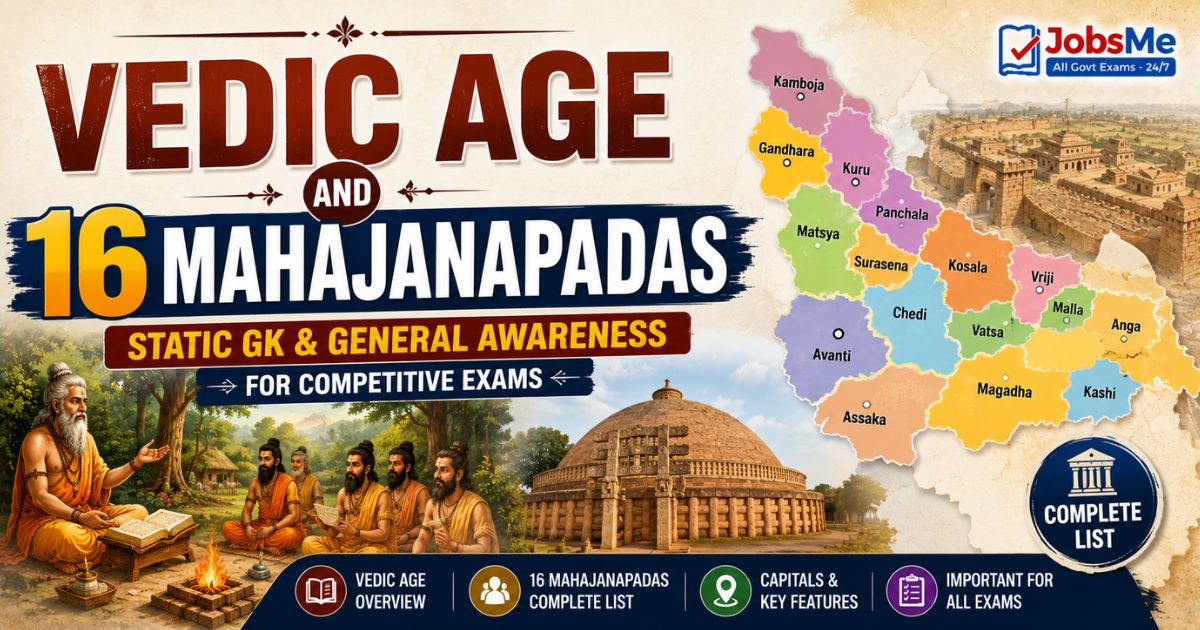
Vedic Age and 16 Mahajanapadas – Static GK & General Awareness for Competitive Exams with Memory Tricks
This article gives a complete, exam-ready overview of the Vedic Age (1500–600 BCE) and the 16 Mahajanapadas of ancient India, covering the Early and Later Vedic periods, Vedic literature, the Sapta Sindhu rivers, society, polity, and economy, along with the names, capitals, present-day locations, rulers, and key facts of all sixteen Mahajanapadas. It includes the four Vedas, important assemblies like Sabha and Samiti, the rise of Magadha, republics and monarchies, and the Second Urbanisation, presented with memory tricks and one-liners for quick revision. All facts are arranged in a structured format to help UPSC, SSC, IBPS, RRB, PSU, and State PCS aspirants score better in General Awareness and Ancient History sections.
National Highways of India – Complete List, Numbering System & Static GK for Competitive Exams with Memory Tricks
This article gives a complete, exam-ready guide to the National Highways of India, covering the longest highway (NH 44), the shortest highway, the 2010 numbering system, key corridors like the Golden Quadrilateral and the North-South & East-West corridors, the role of NHAI and MoRTH, milestone colour codes, and the top longest highways with their routes. It includes memory tricks, frequently confused facts, repeating PYQ patterns, and one-liners for quick revision. All facts are arranged in a structured format to help UPSC, SSC, IBPS, RRB, PSU, and State PCS aspirants score better in General Awareness and Static GK sections.
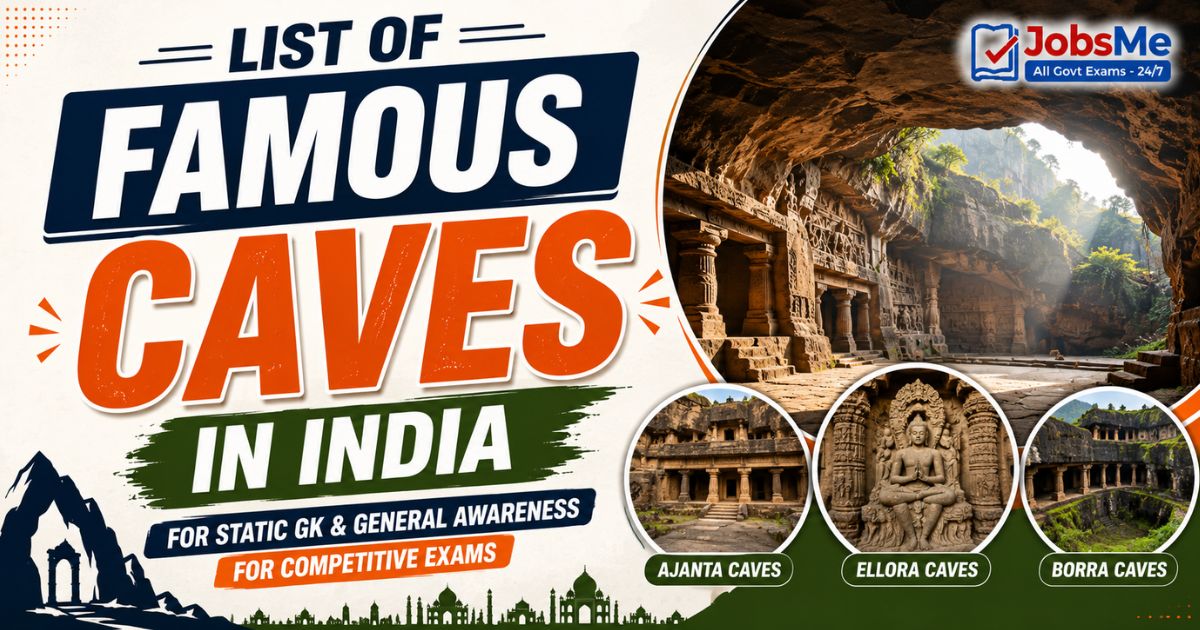
List of Famous Caves in India – Static GK & General Awareness for Competitive Exams with Memory Tricks
This article presents a complete list of famous caves in India along with their states, rivers/hills, religion, and key features, covering Buddhist, Hindu, and Jain rock-cut caves as well as natural limestone caves. It includes iconic sites like Ajanta and Ellora (Maharashtra), Elephanta (Mumbai), Bhimbetka (Madhya Pradesh), Udayagiri-Khandagiri (Odisha), Badami (Karnataka), Barabar (Bihar), Borra (Andhra Pradesh), and the longest cave Krem Liat Prah (Meghalaya), with memory tricks and one-liners for quick revision. All facts are arranged in exam-ready format to help UPSC, SSC, IBPS, RRB, PSU, and State PCS aspirants score better in General Awareness, Art & Culture, and Geography sections.
Hill Stations of India – Complete Static GK & General Awareness List for Competitive Exams with Memory Tricks
This article presents a complete state-wise list of important hill stations of India, covering their locations, mountain ranges, elevations, famous nicknames, and key attractions. It includes major hill stations like Shimla (Queen of Hills), Ooty (Queen of Hill Stations), Darjeeling, Mussoorie, Nainital, Munnar, Khajjiar (Mini Switzerland of India), and Shillong (Scotland of the East), along with memory tricks and one-liners for quick revision. All facts are arranged in exam-ready format to help UPSC, SSC, IBPS, RRB, PSU, and State PCS aspirants score better in the Indian Geography and General Awareness sections.
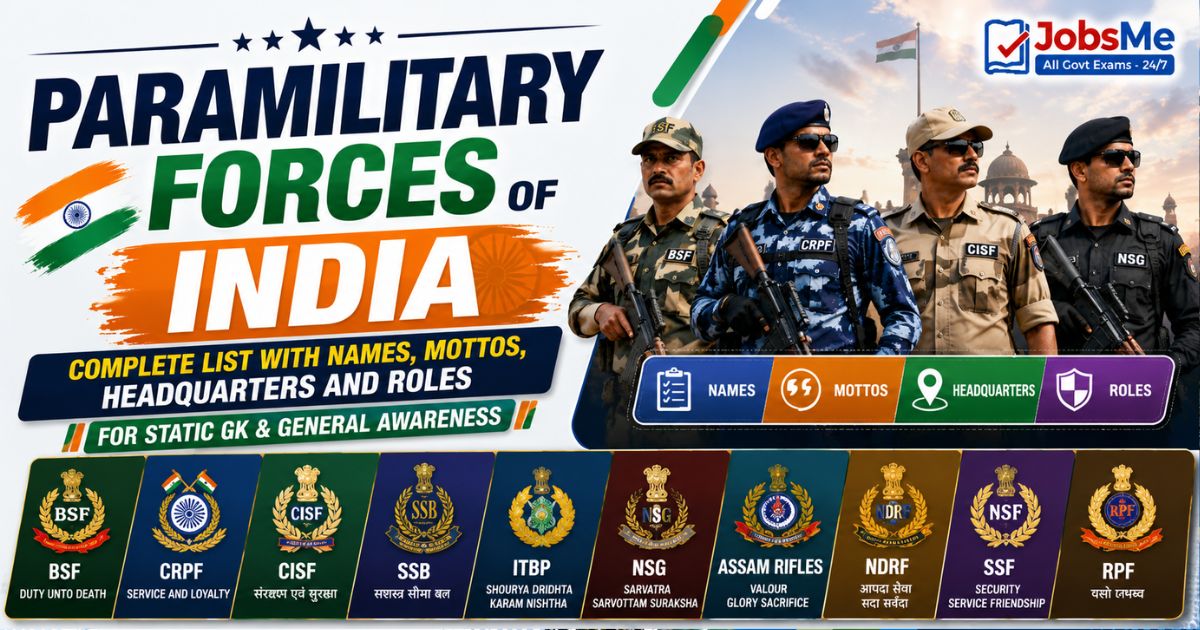
Paramilitary Forces of India – Complete List with Names, Mottos, Headquarters and Roles for Static GK & General Awareness
This article gives a complete, exam-ready guide to the Paramilitary Forces of India, covering all seven Central Armed Police Forces (CAPFs) – Assam Rifles, BSF, CISF, CRPF, ITBP, NSG, and SSB – along with the Indian Coast Guard, Special Frontier Force, Special Protection Group, Railway Protection Force, and National Disaster Response Force. It includes raising days, mottos, controlling ministries, key roles, special units like RAF and CoBRA, memory tricks, frequently confused facts, and one-liners. All facts are arranged for quick revision to help UPSC, SSC, IBPS, RRB, PSU, Defence, and State PCS aspirants score better in General Awareness and Internal Security sections.

Military Ranks of Indian Armed Forces Static GK: Complete Hierarchy of Army, Navy, Air Force and CAPF
This article gives exam aspirants a complete, easy-to-revise guide to the military ranks of the Indian Armed Forces — covering the Army, Navy, Air Force and CAPF in full hierarchical order. It includes insignia, current service chiefs (2026), promotion timelines, memory tricks and one-liners crafted for UPSC, SSC, NDA, CDS, Banking and State PCS exams.
ISRO Centres and Locations: Complete Static GK List for SSC, UPSC, Banking and Railway Exams
This article covers the complete list of ISRO centres and their locations across India, along with their key functions, founders, salient facts and major milestones. It is a high-yield static GK topic frequently asked in UPSC, SSC, IBPS, RRB, Insurance and Defence exams, presented with easy memory tricks and exam-ready one-liners.

List of Major Glaciers of India and Their Rivers – Static GK & General Awareness for Competitive Exams with Memory Tricks
This article presents a complete list of the major glaciers of India along with their location, mountain range, length, the rivers they feed, and their strategic, religious, and environmental significance. It covers important glaciers like Siachen (largest in India), Gangotri (source of the Ganga), Zemu (largest in the Eastern Himalayas), Yamunotri, Bara Shigri, Pindari, Milam, and Drang-Drung, with memory tricks and one-liners for quick revision. All facts are arranged in exam-ready format to help UPSC, SSC, IBPS, RRB, PSU, and State PCS aspirants score better in General Awareness and Indian Geography sections.
Important Himalayan Passes of India – Static GK & General Awareness for Competitive Exams with Memory Tricks
This article presents a complete, state-wise list of the important Himalayan passes of India, covering their location, mountain range, altitude, the regions or countries they connect, and the rivers or trade routes associated with them. It includes high-frequency exam passes like Khardung La, Zoji La, Banihal, Rohtang, Bara-lacha La, Shipki La, Nathu La, Jelep La, Lipulekh, Mana, Sela, and Bomdi La, along with memory tricks and one-liners for quick revision. All facts are arranged in exam-ready format to help UPSC, SSC, IBPS, RRB, PSU, and State PCS aspirants score better in General Awareness and Indian Geography sections.
List of Important Waterfalls of India – Static GK & General Awareness for Competitive Exams with Memory Tricks
This article presents a complete list of the important waterfalls of India, covering the tallest, widest, and most famous falls along with their rivers, states, and key features. It includes iconic falls like Kunchikal Falls (highest in India), Nohkalikai Falls (highest plunge waterfall), Jog Falls (Sharavathi River), Dudhsagar Falls (Sea of Milk), Chitrakote Falls (widest, Niagara of India), and Athirappilly Falls (Niagara of South India), with memory tricks and one-liners for quick revision. All facts are arranged in exam-ready format to help UPSC, SSC, IBPS, RRB, PSU, and State PCS aspirants score better in Geography and General Awareness sections.
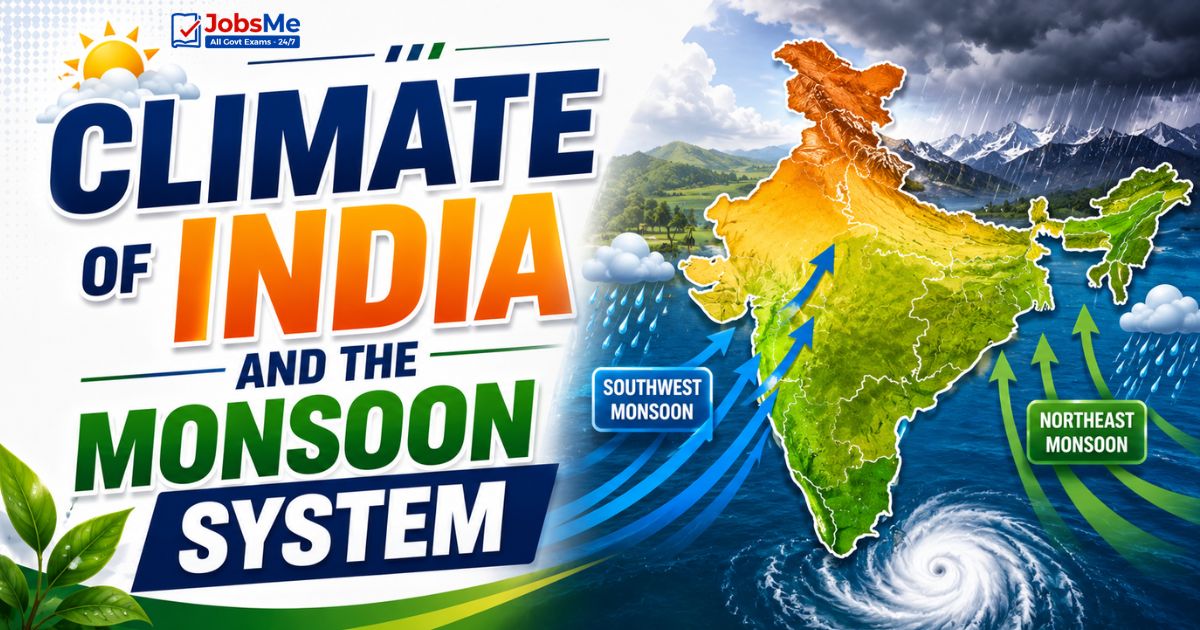
Climate of India and the Monsoon System – Static GK & General Awareness for Competitive Exams with Memory Tricks
This article presents a complete, exam-ready guide to the Climate of India and the Monsoon System, covering the factors that control India's climate, the four seasons, the mechanism of the Southwest and Northeast Monsoons, important local winds (Loo, Mango Showers, Kal Baisakhi), rainfall extremes, Koppen's climatic regions, and key phenomena like El Nino, La Nina, IOD, ITCZ, and jet streams. It includes memory tricks, frequently confused facts, and one-liners covering every major fact for quick revision. All content is arranged to help UPSC, SSC, IBPS, RRB, PSU, and State PCS aspirants score better in the Geography and General Awareness sections.
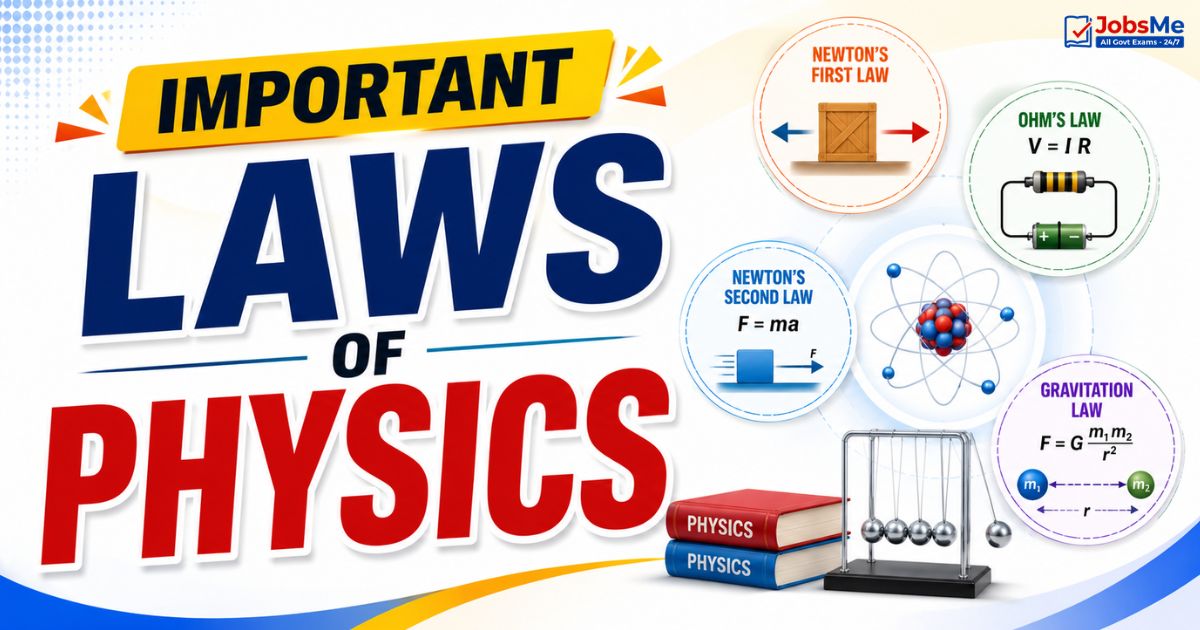
Important Laws of Physics – Static GK & General Awareness for Competitive Exams with Formulas and Memory Tricks
This article presents a complete list of the most important laws of physics, covering laws of motion, gravitation, electricity, magnetism, optics, thermodynamics, gas laws, and modern physics, along with their statements, formulas, discoverers, and real-life applications. It includes frequently asked laws like Newton's Three Laws of Motion, Ohm's Law, Coulomb's Law, Archimedes' Principle, Hooke's Law, Boyle's Law, the Laws of Thermodynamics, and Kepler's Laws, with memory tricks and one-liners for quick revision. All facts are arranged in exam-ready format to help UPSC, SSC, IBPS, RRB, PSU, and State PCS aspirants score better in the General Science and Physics sections.
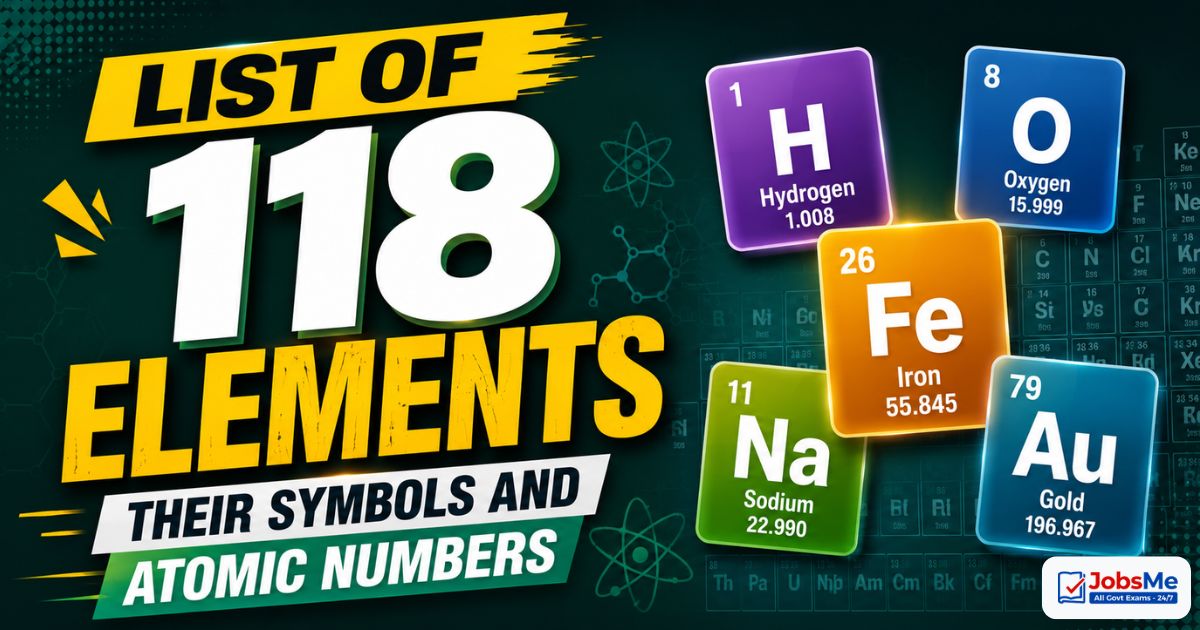
List of 118 Elements, Their Symbols and Atomic Numbers – Static GK & General Science for Competitive Exams with Memory Tricks
This article presents the complete list of all 118 elements of the modern periodic table with their chemical symbols and atomic numbers, from Hydrogen (H, 1) to Oganesson (Og, 118), along with the Latin-origin symbols that confuse most students. It includes important facts on atomic number, chemical symbols, smallest and largest atoms, and exam-ready memory tricks and one-liners for quick revision. All facts are arranged in exam-ready format to help UPSC, SSC, IBPS, RRB, PSU, and State PCS aspirants score better in the General Science and General Awareness sections.
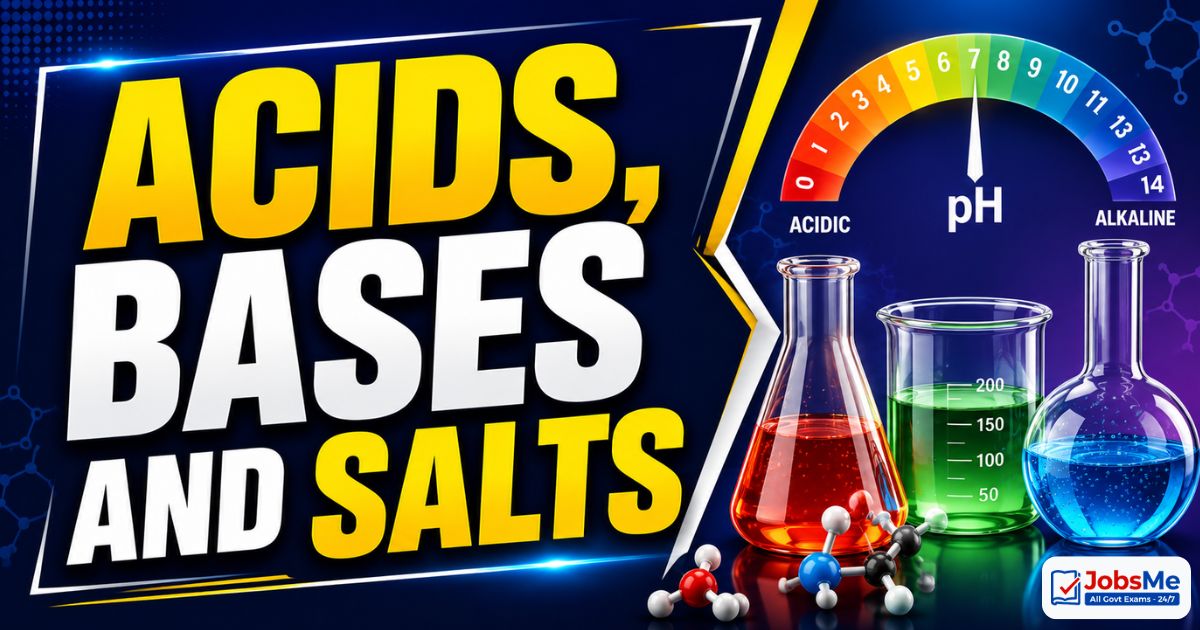
Acids, Bases and Salts – Static GK & General Awareness for Competitive Exams with Memory Tricks
This article presents a complete, exam-ready guide to Acids, Bases and Salts, covering their definitions, properties, the pH scale, acid-base indicators, common acids and bases with their chemical formulas and sources, and important salts of daily life like common salt, baking soda, washing soda, bleaching powder and plaster of Paris. It explains key concepts such as neutralisation, strong vs weak acids, natural and synthetic indicators, and the everyday and industrial uses of each chemical, along with memory tricks and one-liners for quick revision. All facts are arranged in a structured format to help UPSC, SSC, IBPS, RRB, PSU, and State PCS aspirants score better in the General Science and General Awareness sections.
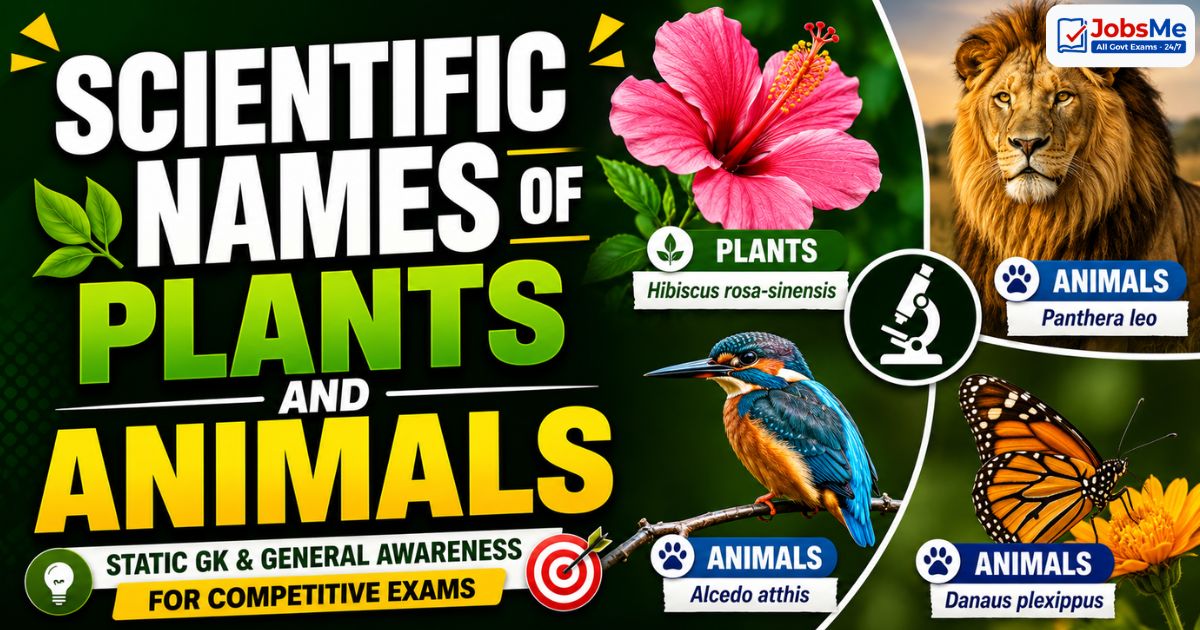
Scientific Names of Plants and Animals – Static GK & General Awareness for Competitive Exams with Memory Tricks
This article presents a complete list of scientific names (binomial nomenclature) of common animals, birds, plants, fruits, vegetables, and crops, along with the meaning of genus and species and the rules for writing scientific names correctly. It includes high-frequency exam facts like Homo sapiens (human), Panthera tigris (tiger), Mangifera indica (mango), and Oryza sativa (rice), with memory tricks and one-liners for quick revision. All facts are arranged in exam-ready format to help UPSC, SSC, IBPS, RRB, PSU, and State PCS aspirants score better in the General Awareness and General Science sections.
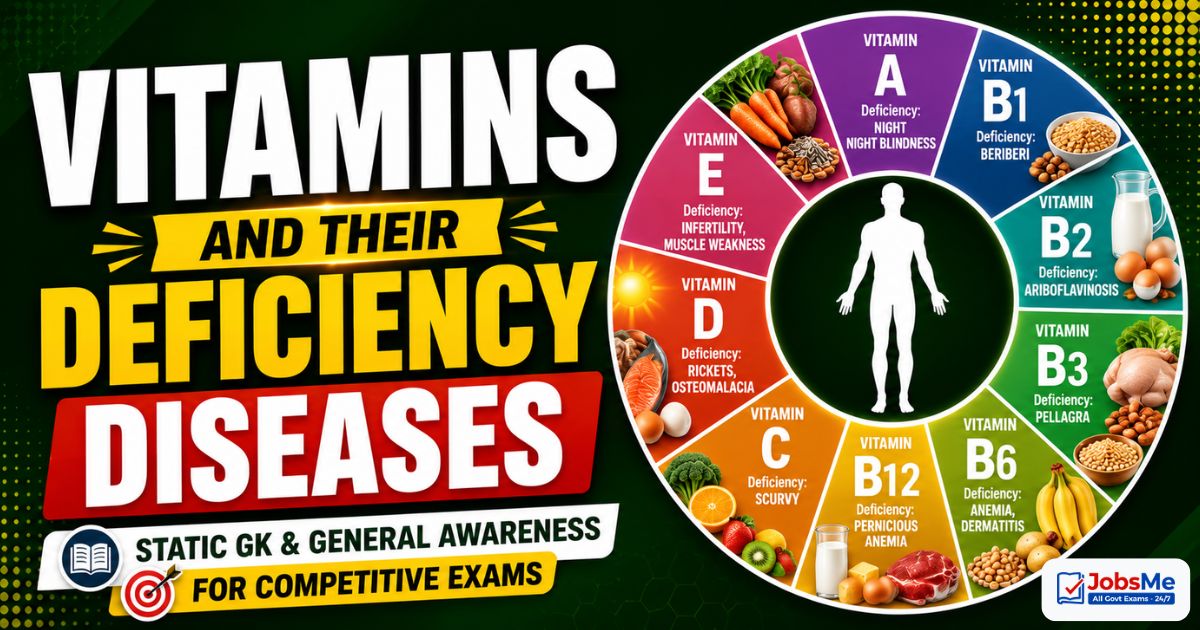
Vitamins and Their Deficiency Diseases – Static GK & General Awareness for Competitive Exams with Memory Tricks
This article presents a complete list of vitamins, their chemical (scientific) names, solubility, deficiency diseases, key functions, and food sources, covering all 13 essential vitamins including Vitamin A (Retinol), Vitamin C (Ascorbic Acid), Vitamin D (Calciferol), and the entire B-complex group. It explains classic deficiency diseases such as Night Blindness, Beriberi, Pellagra, Scurvy, Rickets, and Anaemia in a simple, exam-ready format with memory tricks and one-liners for quick revision. All facts are arranged to help UPSC, SSC, IBPS, RRB, PSU, and State PCS aspirants score better in the General Science and General Awareness sections.
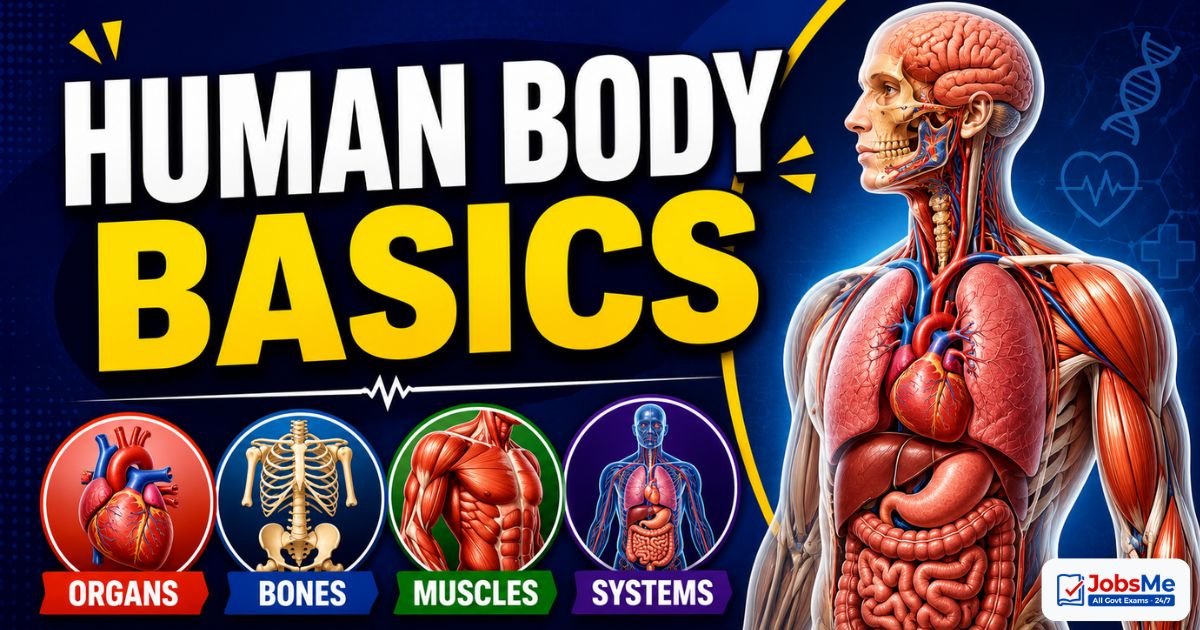
Human Body Basics – Static GK & General Awareness Notes on Organs, Bones, Muscles and Systems for Competitive Exams with Memory Tricks
This article presents complete Human Body Basics for competitive exams, covering the major organ systems, important facts about bones, muscles, blood, the heart, brain, and key "largest, smallest, longest" anatomy records. It includes high-frequency facts like 206 bones in an adult, the femur as the longest bone, the stapes as the smallest bone, the skin as the largest organ, and the liver as the largest internal organ, along with memory tricks and one-liners for quick revision. All facts are arranged in exam-ready format to help UPSC, SSC, IBPS, RRB, PSU, and State PCS aspirants score better in General Awareness and General Science sections.
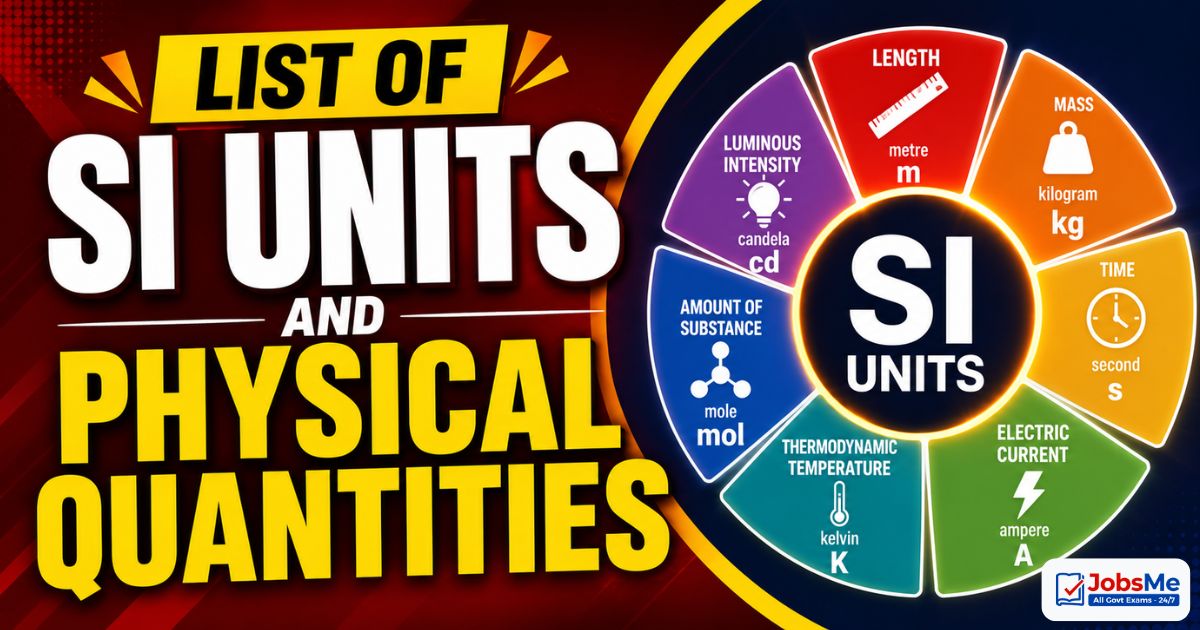
List of SI Units and Physical Quantities – Static GK & General Awareness for Competitive Exams with Memory Tricks
This article presents a complete list of physical quantities and their SI units, covering the seven SI base quantities (length, mass, time, electric current, temperature, amount of substance, luminous intensity), important derived units (force, energy, power, pressure, etc.), supplementary units, and commonly used non-SI and CGS units, along with their symbols and the scientists they are named after. It includes exam-favourites like the metre, kilogram, second, ampere, kelvin, mole, candela, newton, joule, watt, pascal, and hertz, with memory tricks and one-liners for quick revision. All facts are arranged in exam-ready format to help UPSC, SSC, IBPS, RRB, PSU, and State PCS aspirants score better in General Science and General Awareness sections.
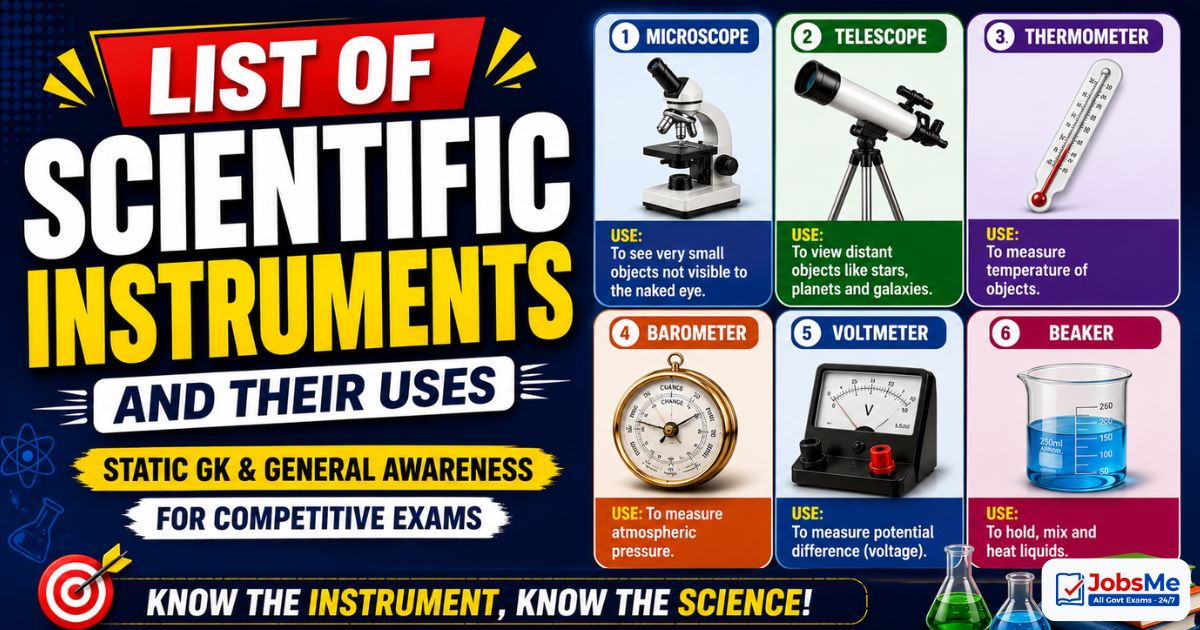
List of Scientific Instruments and Their Uses – Static GK & General Awareness for Competitive Exams with Memory Tricks
This article presents a complete list of scientific instruments and their uses, covering measuring devices used in physics, chemistry, biology, meteorology, medicine, navigation, and engineering, along with the quantity each instrument measures and its inventor wherever relevant. It includes commonly asked instruments like the barometer (atmospheric pressure), seismograph (earthquakes), anemometer (wind speed), sphygmomanometer (blood pressure), and ammeter (electric current), with memory tricks and one-liners for quick revision. All facts are arranged in exam-ready format to help UPSC, SSC, IBPS, RRB, PSU, and State PCS aspirants score better in the General Awareness and General Science sections.
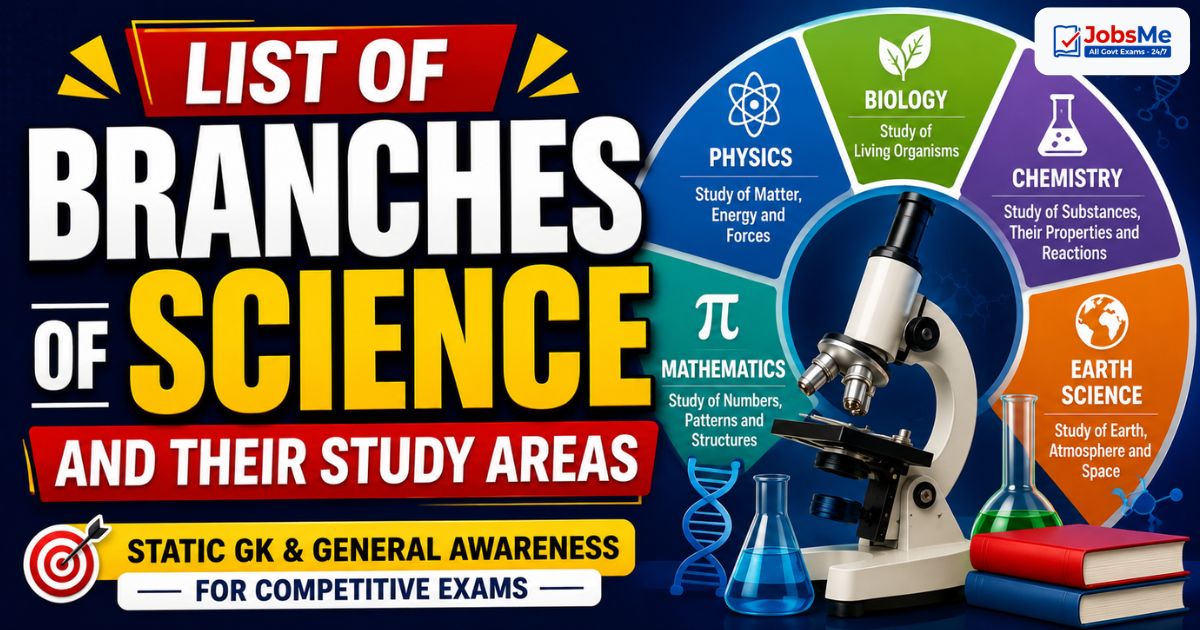
List of Branches of Science and Their Study Areas – Static GK & General Awareness for Competitive Exams with Memory Tricks
This article presents a complete list of the important branches of science and what each one studies, covering branches of Biology, Physics, Chemistry, Earth Science, Medical Science, Social Science, and the special "-culture" agricultural sciences, along with their meanings and exam-ready descriptions. It includes high-frequency terms like Ornithology (birds), Entomology (insects), Seismology (earthquakes), Cardiology (heart), Pedology (soil), Sericulture (silkworms), and Numismatics (coins), with memory tricks and one-liners for quick revision. All facts are arranged in exam-ready format to help UPSC, SSC, IBPS, RRB, PSU, and State PCS aspirants score better in the General Awareness and General Science sections.
List of Major Global Reports and Publishing Bodies – Static GK & General Awareness for Competitive Exams with Memory Tricks
This article presents a complete, organisation-wise list of major global reports and the international bodies that publish them, covering the UN system (UNDP, UNEP, UNESCO, UNICEF, WHO, ILO, UNCTAD, UNODC and more), the World Bank, IMF, WTO, WEF, OECD, IEA, OPEC, WIPO, FAO, Transparency International and other key publishers. It includes high-frequency reports such as the Human Development Report, World Development Report, World Economic Outlook, Global Competitiveness Report, Global Innovation Index, Global Hunger Index, World Happiness Report, Global Peace Index and many others, along with memory tricks and one-liners for quick revision. All facts are arranged in exam-ready format to help UPSC, SSC, IBPS, RRB, PSU, Insurance and State PCS aspirants score better in the General Awareness and Current Affairs sections.
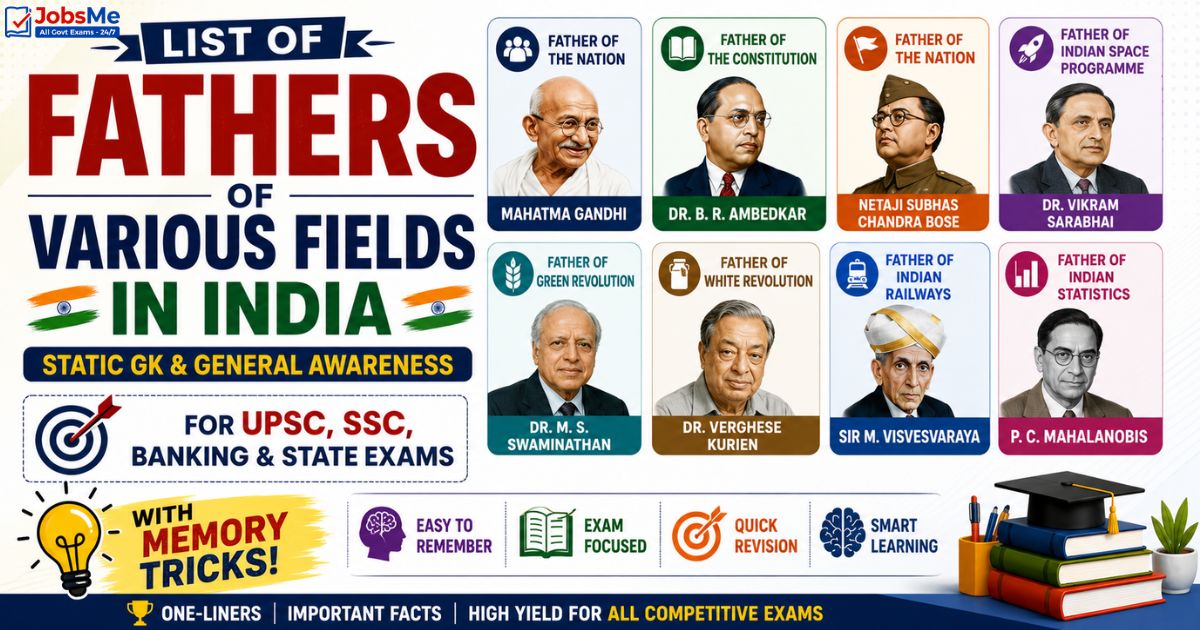
List of Fathers of Various Fields in India – Static GK & General Awareness for Competitive Exams with Memory Tricks
This article presents a complete list of the Fathers of Various Fields in India, covering politics, science, agriculture, defence, medicine, arts, literature, sports, and social sciences, along with the reasons behind each title. It includes iconic pioneers like Mahatma Gandhi (Father of the Nation), Dr. B. R. Ambedkar (Father of the Indian Constitution), Vikram Sarabhai (Father of Indian Space Programme), Homi J. Bhabha (Father of Indian Nuclear Programme), A. P. J. Abdul Kalam (Father of Indian Missile Programme), M. S. Swaminathan (Father of Green Revolution), Verghese Kurien (Father of White Revolution), and Major Dhyan Chand (Father of Indian Hockey), with memory tricks and one-liners for quick revision. All facts are arranged in exam-ready format to help UPSC, SSC, IBPS, RRB, PSU, and State PCS aspirants score better in General Awareness and Static GK sections.
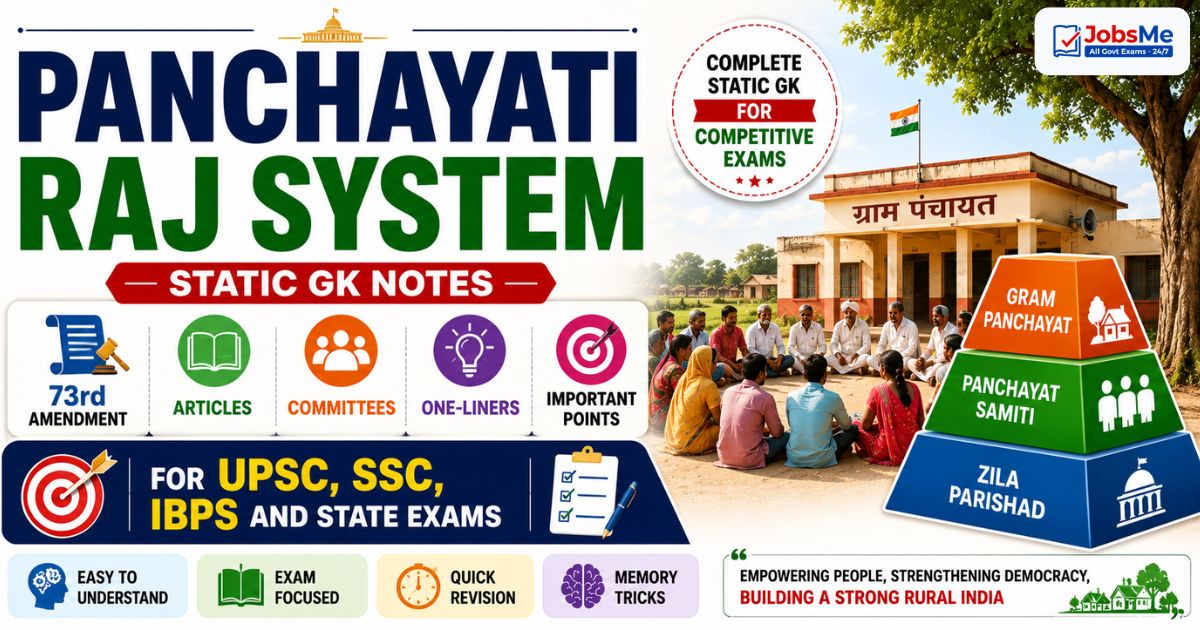
Panchayati Raj System Static GK Notes - 73rd Amendment, Articles, Committees and One-Liners for UPSC, SSC, IBPS and State Exams
This article gives a complete static GK package on the Panchayati Raj System covering its historical evolution, the 73rd Constitutional Amendment Act of 1992, all important articles (243 to 243-O), the Eleventh Schedule, key committees, reservations, finance and election bodies. It is designed for UPSC, SSC CGL, IBPS PO/Clerk, RRB NTPC, Insurance and State PCS aspirants and includes mnemonics, comparison tables and one-liners for fast revision.
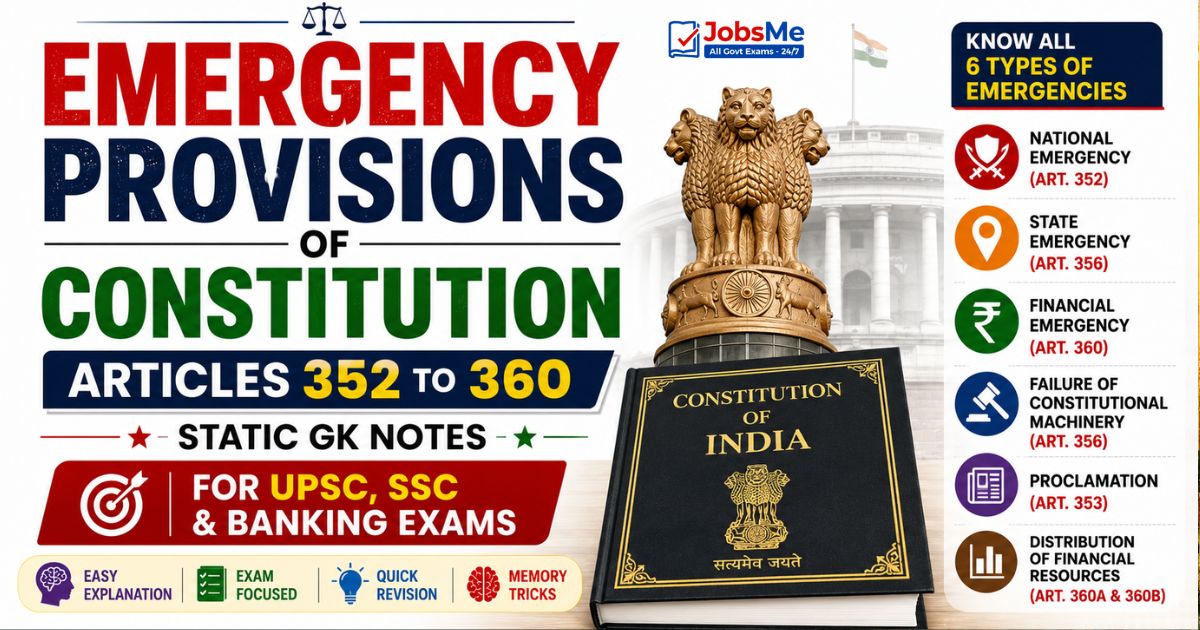
Emergency Provisions of Constitution Static GK: Articles 352 to 360 Notes for UPSC, SSC and Banking Exams
This article explains the Emergency Provisions of the Indian Constitution under Articles 352 to 360, covering National Emergency, President's Rule, and Financial Emergency in a simple exam-oriented way. Students preparing for UPSC, SSC, IBPS, RRB, and State PCS exams will find detailed tables, memory tricks, landmark cases, and one-liner notes to revise the topic quickly. It is one of the most repeated Static GK and Polity topics across competitive exams.
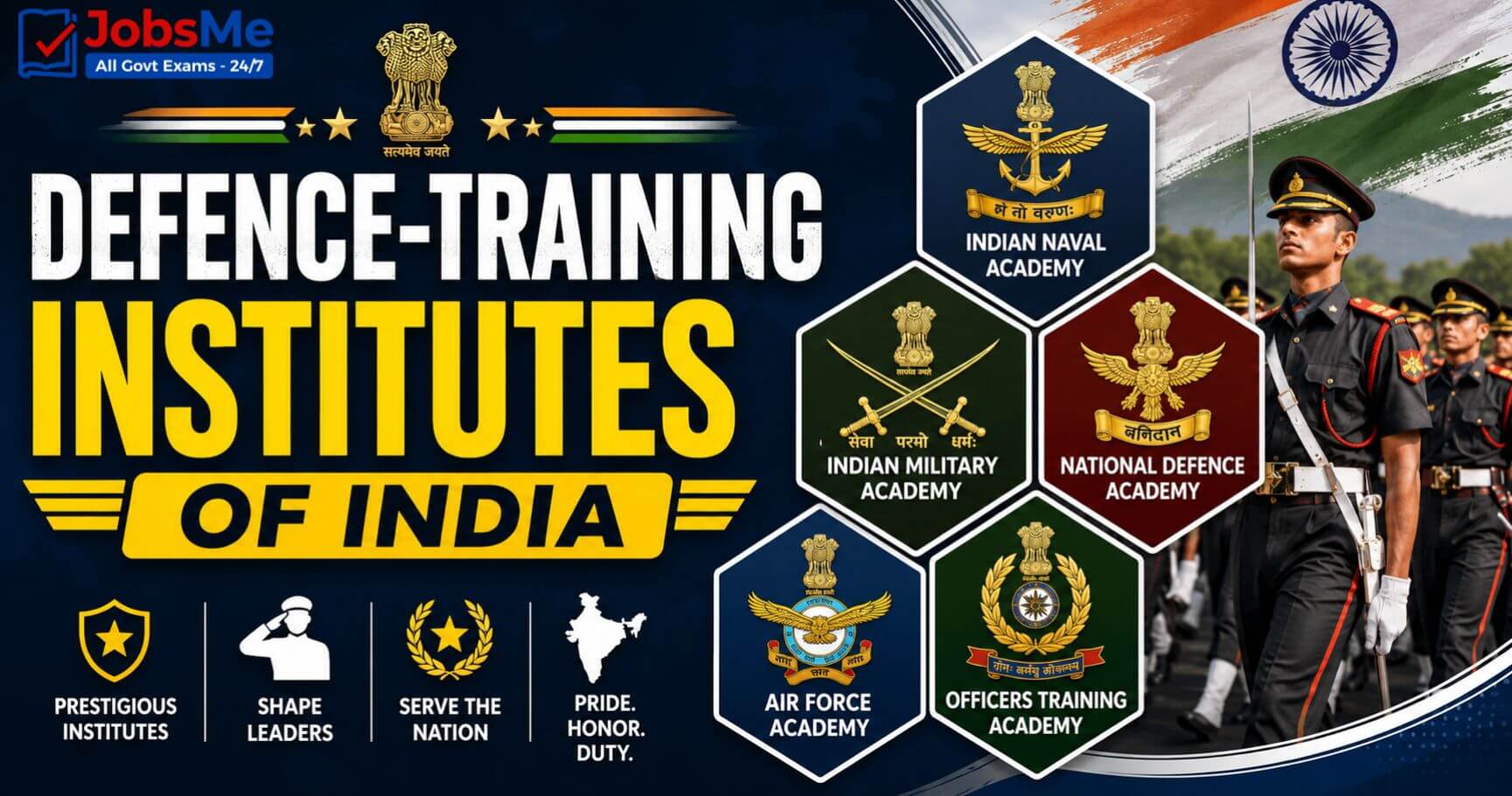
Defence Training Institutes in India: Complete Static GK List of Army, Navy, Air Force and DRDO Academies
This article provides the complete Static GK list of Defence Training Institutes in India along with their locations across the Indian Army, Indian Navy, Indian Air Force and DRDO. It includes memory tricks, frequently confused facts, exam-relevant one-liners and FAQs to help aspirants quickly revise this high-yield topic for UPSC, SSC, IBPS, RRB, Defence and State PCS exams.
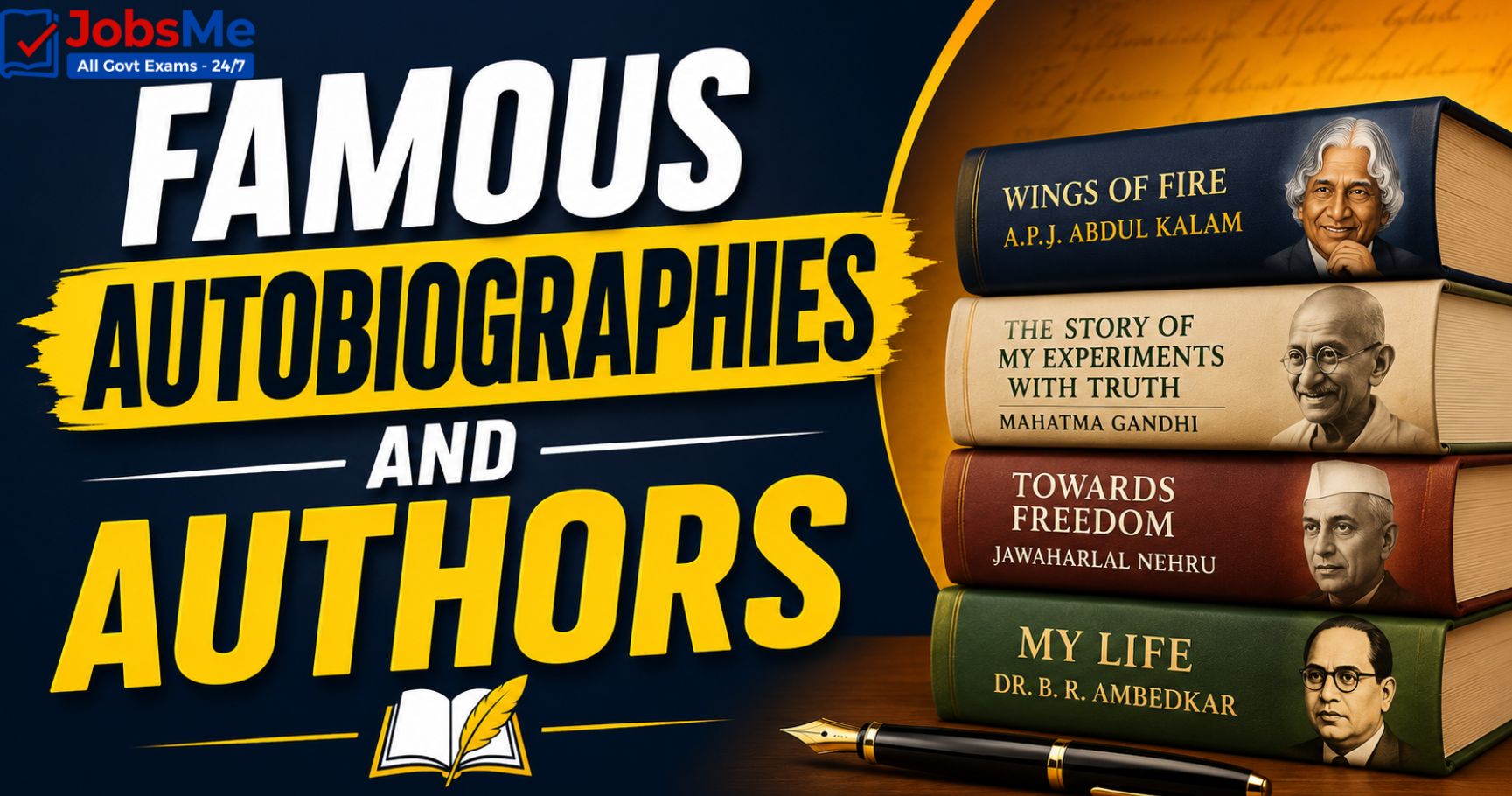
List of Famous Autobiographies and Their Authors – Static GK & General Awareness for UPSC, SSC, IBPS & Banking Exams with Memory Tricks
This article presents a complete, exam-ready list of famous autobiographies and their authors covering Indian and world leaders, sportspersons, scientists, writers, judges, activists, and film personalities — from Mahatma Gandhi's "My Experiments with Truth" and A.P.J. Abdul Kalam's "Wings of Fire" to Nelson Mandela's "Long Walk to Freedom", Sachin Tendulkar's "Playing It My Way", Mary Kom's "Unbreakable", Bill Gates's "Source Code", and Sakshi Malik's "Witness". Every author, book title, and year is arranged with memory tricks, one-liners, and FAQs to help UPSC, SSC CGL, IBPS PO/Clerk, RRB NTPC, PSU, Insurance, MBA, and State PCS aspirants score better in the General Awareness and Books & Authors sections.
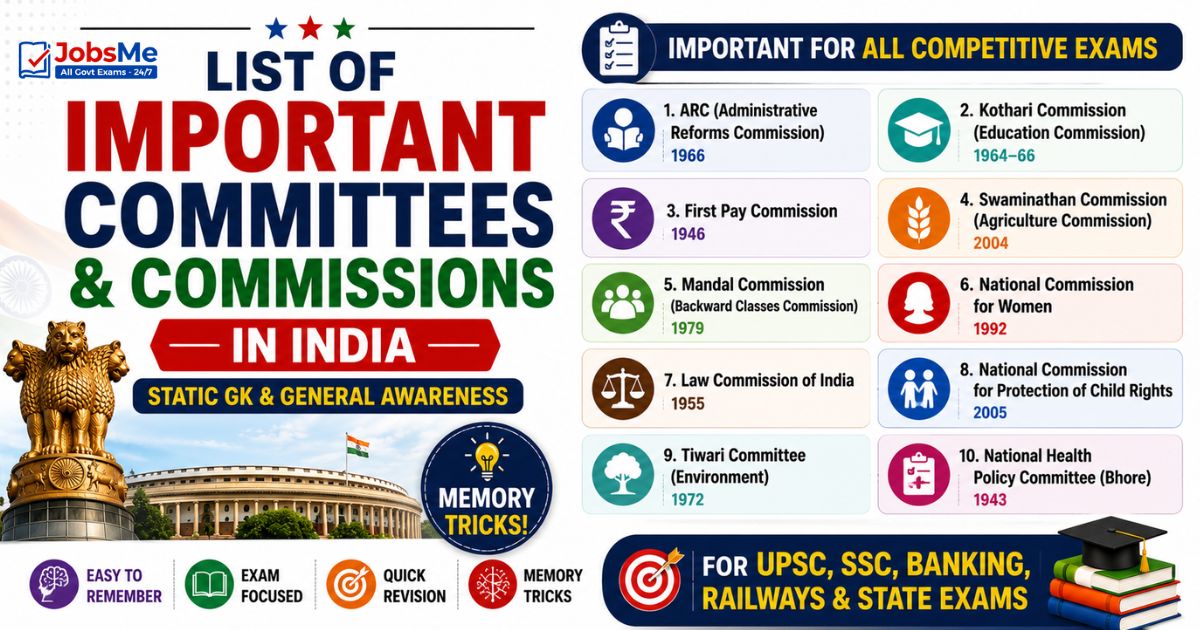
List of Important Committees and Commissions in India – Static GK & General Awareness for Competitive Exams with Memory Tricks
This article presents a complete list of important committees and commissions in India, covering Centre-State relations, Panchayati Raj, administrative reforms, education, banking, tax, police, social justice, and parliamentary committees, along with their chairpersons, year of establishment, and key recommendations. It includes iconic bodies like the Sarkaria Commission, Mandal Commission, Kothari Commission, Punchhi Commission, Narasimham Committee, Balwant Rai Mehta Committee, ARC I and II, Shah Commission, Liberhan Commission, and all major permanent commissions like UPSC, ECI, UGC, NHRC, CVC, and CCI, with memory tricks and one-liners for quick revision. All facts are arranged in exam-ready format to help UPSC, SSC, IBPS, RRB, PSU, Insurance, and State PCS aspirants score better in General Awareness, Polity, and Governance sections.
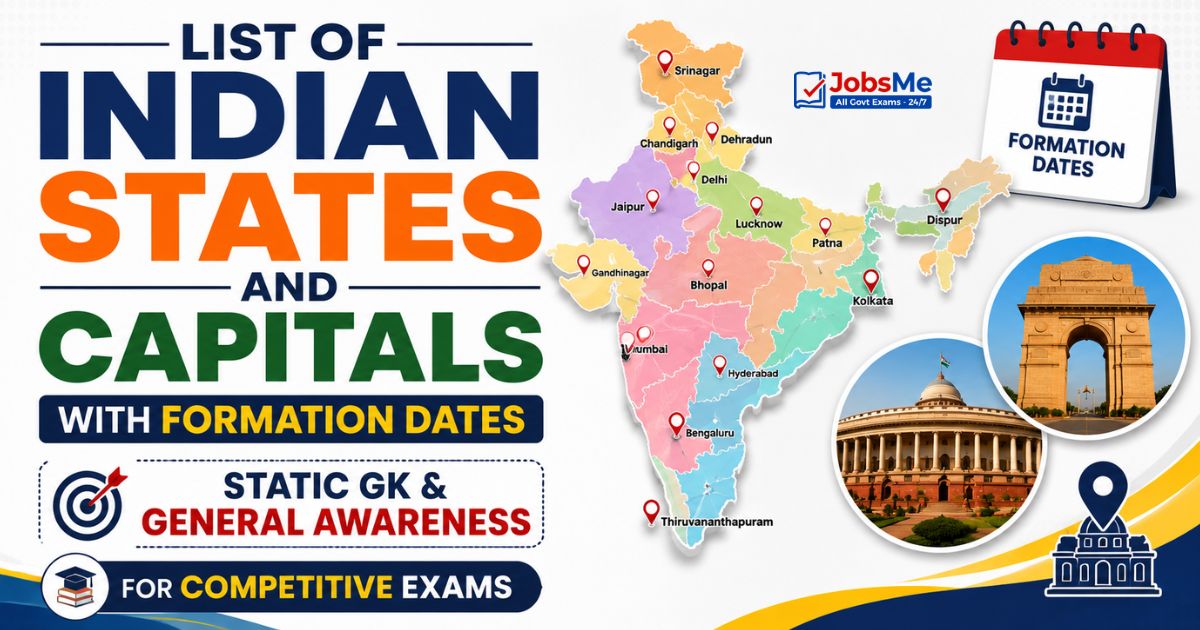
List of Indian States and Capitals with Formation Dates – Static GK & General Awareness for Competitive Exams with Memory Tricks
This article presents a complete list of all 28 Indian States and 8 Union Territories with their capitals, formation dates, governing acts, official languages, and state specialities. It includes every major fact tested in competitive exams – from the States Reorganisation Act of 1956 to the latest 2026 amendment making Amaravati the sole capital of Andhra Pradesh – along with memory tricks, mnemonics, and one-liners for quick revision. All facts are arranged in exam-ready format to help UPSC, SSC, IBPS, RRB, PSU, Defence, and State PCS aspirants score better in General Awareness, Indian Polity, and Geography sections.
Parliament of India – Lok Sabha and Rajya Sabha Static GK & General Awareness for Competitive Exams with Memory Tricks
This article presents a complete and exam-ready guide to the Indian Parliament, covering the composition, powers, and functions of the Lok Sabha (House of the People) and Rajya Sabha (Council of States) along with key Articles (79 to 122) of the Constitution, sessions, bills, majorities, parliamentary devices, and important constitutional amendments. It also lists every important Speaker, Chairman, Leader of Opposition, qualification, quorum, and joint sitting fact in one place with memory tricks, one-liners, and PYQ patterns. All facts are arranged to help UPSC, SSC, IBPS, RRB, PSU, Defence, Insurance, and State PCS aspirants score better in Polity and General Awareness.
Fundamental Rights, Duties, and DPSP Static GK Notes for UPSC, SSC, Banking and Railways Exams
This article gives a complete one-stop revision of Fundamental Rights (Articles 12-35), Fundamental Duties (Article 51A), and the Directive Principles of State Policy (Articles 36-51) of the Indian Constitution. It includes all articles, landmark Supreme Court cases, key amendments, memory tricks, and one-liners specially curated for UPSC, SSC, IBPS, RRB, Insurance, Defence, and State PCS aspirants.
Parts of the Indian Constitution – Static GK & General Awareness for Competitive Exams with Memory Tricks
This article presents a complete list of all 25 Parts of the Indian Constitution along with their subject matter, article ranges, and key features — covering Fundamental Rights, Directive Principles, Fundamental Duties, Panchayats, Municipalities, Emergency Provisions, and every other constitutional segment. It includes the four parts added later (Part IVA, IXA, IXB and XIVA), the repealed Part VII, and detailed memory tricks for instant recall. All facts are arranged in exam-ready format to help UPSC, SSC, IBPS, RRB, PSU, Insurance and State PCS aspirants score better in Indian Polity and General Awareness sections.
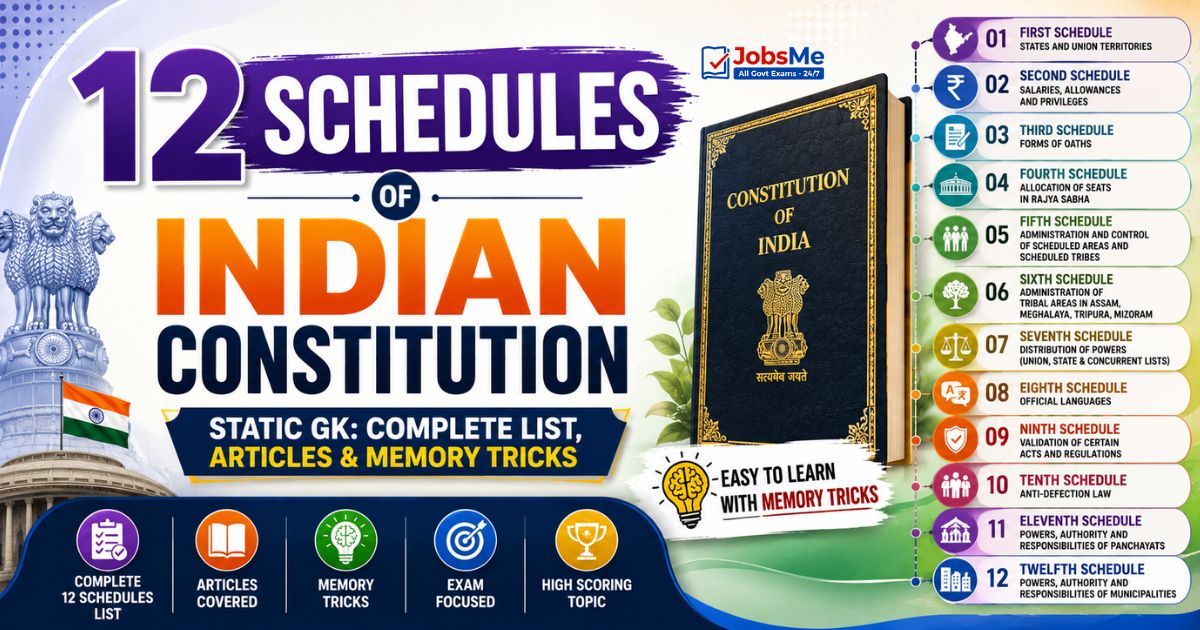
12 Schedules of Indian Constitution Static GK: Complete List, Articles and Memory Tricks
This article gives a complete, exam-ready overview of all 12 Schedules of the Indian Constitution, the Articles linked to each Schedule, and the Constitutional Amendments that added the 9th, 10th, 11th and 12th Schedules. It is built for UPSC, SSC, IBPS, RRB, State PCS and Defence aspirants who need quick revision notes, mnemonics and a one-shot reference for Static GK and Polity.
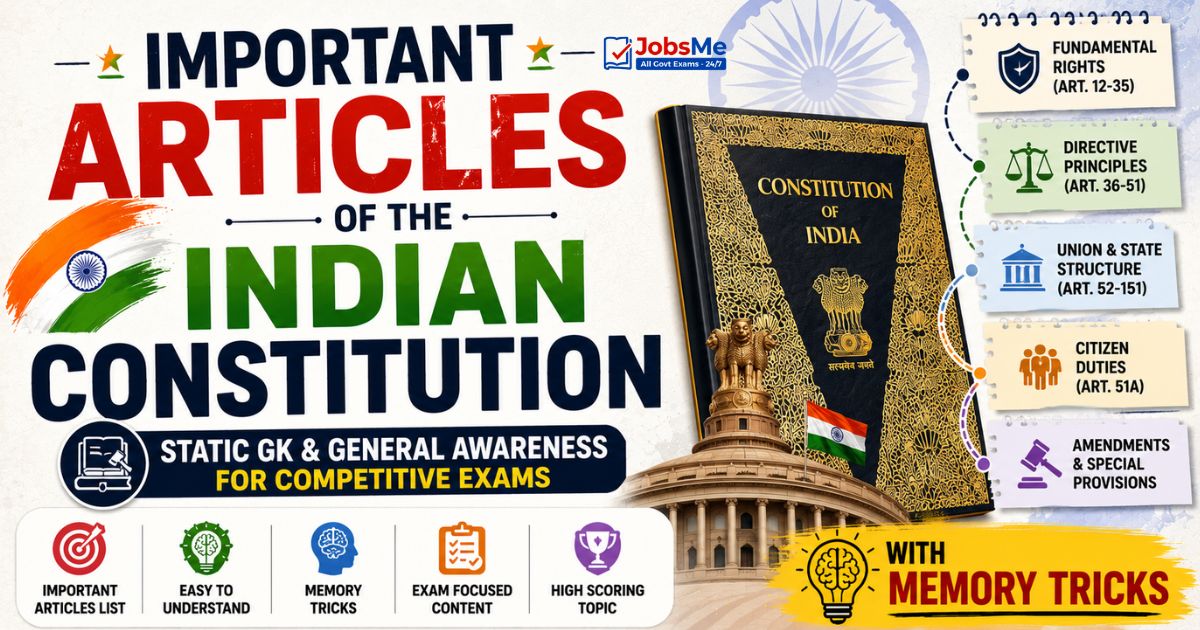
Important Articles of the Indian Constitution – Static GK & General Awareness for Competitive Exams with Memory Tricks
This article presents a complete, exam-ready list of the most important Articles of the Indian Constitution, arranged Part-wise from Article 1 to Article 395, covering Fundamental Rights, Directive Principles, Fundamental Duties, Union and State Government, Judiciary, Finance Commission, Elections, Emergency Provisions, and the Amendment procedure. It includes key articles like Article 14 (Equality), Article 19 (Six Freedoms), Article 21 (Right to Life), Article 32 (Constitutional Remedies), Article 356 (President's Rule), Article 368 (Amendment), and Article 370 (J&K), along with memory tricks, mnemonics, and one-liners for quick revision. All facts are arranged in a structured format to help UPSC, SSC, IBPS, RRB, PSU, Insurance, and State PCS aspirants score better in General Awareness, Indian Polity, and Static GK sections.
List of Freedom Fighters and Their Slogans – Static GK & General Awareness for Competitive Exams with Memory Tricks
This article presents a complete list of Indian freedom fighters and their famous slogans, covering the leaders of the Swadeshi, Home Rule, Non-Cooperation, Civil Disobedience, and Quit India Movements, along with the meaning, origin, and historical context behind each slogan. It includes iconic battle cries like "Do or Die" (Gandhi), "Inquilab Zindabad" (Bhagat Singh), "Give Me Blood and I Shall Give You Freedom" (Subhash Chandra Bose), "Swaraj is My Birthright" (Tilak), "Simon Go Back" (Lala Lajpat Rai), and "Vande Mataram" (Bankim Chandra Chattopadhyay), with memory tricks and exam-ready one-liners. All facts are arranged in a structured format to help UPSC, SSC, IBPS, RRB, PSU, and State PCS aspirants score better in General Awareness and Modern History sections.
Introduction
JobsMe's Static GK section is your permanent, exam-ready knowledge base - a growing library of topic-wise Static General Knowledge posts and interactive quizzes covering every high-frequency subject tested in SSC, Banking, UPSC, Railways, Defence, Insurance, and State PSC examinations. Unlike current affairs, which change every day, Static GK is the fixed foundation of your General Awareness preparation - facts about Indian history, world geography, the Indian Constitution, important organisations, science fundamentals, national symbols, books and authors, and more. These facts do not expire. Master them once, and they score for you across every exam you sit.
Every Static GK topic on JobsMe comes with a free interactive quiz - attempt it, get your instant score, and if you are logged in, track how your performance improves across attempts over time. Your preparation history is stored, so you always know where you stand and what to work on next.
📖 Browse Static GK Posts → 🧩 Attempt Static GK Quizzes → 📅 Daily Current Affairs → 📆 Monthly Current Affairs →
What Is Static GK and Why Does It Matter
Static General Knowledge, often called Static GK or Static Awareness, refers to facts and information that do not change over time. The capital of France is Paris - that fact was true fifty years ago and will be true fifty years from now. The year of the Battle of Plassey, the name of the first Chairman of ISRO, the founding year of the United Nations - none of these facts change based on current events. This is what makes Static GK uniquely valuable: time invested in learning it is time that keeps paying dividends across every exam you appear for.
The difference between Static GK and Current Affairs is the difference between a permanent asset and a depreciating one. Both are essential, but they require different preparation strategies. Static GK rewards deep, structured learning and systematic revision. Current Affairs rewards consistent daily reading. Together, they form the complete General Awareness preparation that every competitive exam aspirant needs.
Static GK vs Current Affairs - How They Work Together
Many aspirants treat Static GK and Current Affairs as separate subjects. The most effective approach treats them as complementary layers of the same subject. When a new Ramsar site is declared - that is current affairs. But understanding what the Ramsar Convention is, when it was signed, and which body administers it - that is Static GK. When the RBI changes the repo rate - that is current affairs. But understanding what the repo rate is, how the monetary policy committee works, and the constitutional basis of the RBI - that is Static GK.
Aspirants who have built a strong Static GK foundation process current affairs far more efficiently, retain it more accurately, and answer exam questions with greater confidence. Visit daily current affairs and monthly current affairs alongside this section for complete GA preparation.
Topics Covered in JobsMe Static GK
JobsMe's Static GK library is organised by topic, with each topic getting a dedicated post and quiz. The following subjects are covered - spanning every category that appears in competitive exam General Awareness sections.
Indian History
Ancient Indian civilisations, important rulers and dynasties, medieval India, the Mughal Empire, colonial India, the freedom struggle, the Constituent Assembly, and post-independence milestones. Topics include Founders and Rulers of Indian Dynasties, Important Battles in Indian History, the Indian National Movement, and key personalities from Ancient and Medieval India.
World History and Geography
Major world civilisations, the World Wars, the Cold War, formation of the United Nations, decolonisation, and world geography - continents, oceans, mountain ranges, rivers, deserts, and climate zones. Topics include Countries, Capitals and Currencies of the World, World Organisations and their Headquarters, and Superlatives of the World.
Indian Geography
River systems, mountain ranges, plateaus, plains, states and capitals, national parks and wildlife sanctuaries, dams and reservoirs, important lakes, soil types, climate regions, and mineral resources of India. Topics include Superlatives of India, Indian Rivers and their Origins, and National Parks and Biosphere Reserves.
Indian Polity and Constitution
Fundamental Rights and Duties, Directive Principles of State Policy, important Constitutional Amendments, the structure of Parliament and State Legislatures, the President and Prime Minister's powers, constitutional bodies like the Election Commission and CAG, and landmark Supreme Court judgements.
Indian Economy
Five-Year Plans and NITI Aayog, important economic concepts, the banking system structure, types of banks and their functions, RBI's role and monetary policy tools, stock exchanges, and key economic institutions and their headquarters.
Science and Technology
Basic physics, chemistry, and biology concepts, important inventions and inventors, India's space programme milestones (ISRO), major scientific institutions, human body facts, disease and vaccines, and fundamental scientific principles tested in SSC and Railway exams.
Culture, Awards, and Symbols
India's national symbols (animal, bird, flower, song, emblem), important cultural institutions, classical dance forms, folk arts, major literary awards (Sahitya Akademi, Jnanpith, Booker, Nobel), Padma Awards history, and Bharat Ratna recipients.
Miscellaneous High-Frequency Topics
Books and authors, sports - stadiums, trophies and tournaments, Indian cities and their nicknames, First in India (first President, first PM, first IIT, first satellite), Largest/Longest/Highest superlatives, important committees and their purposes, and full forms of important abbreviations.
JobsMe's Interactive Static GK Quizzes - More Than Just a Test
What makes JobsMe's Static GK preparation different from every other platform is the interactive quiz experience. Each topic comes with a free quiz - but these are not static PDFs or basic self-graded exercises. They are fully interactive MCQ tests with instant scoring, detailed explanations, and - for logged-in users - a complete performance history that tracks every attempt.
Instant Score and Detailed Explanations
The moment you submit a quiz, your score appears immediately. Every question - whether you got it right or wrong - shows a full explanation of the correct answer. This means the quiz is not just a test: it is a teaching tool. You learn the material as you attempt it, particularly for questions you answered incorrectly or were uncertain about.
Performance History for Logged-In Users
When you are logged in, JobsMe stores your quiz history. Every attempt is recorded - your score, which questions you got right and wrong, and the date of the attempt. This lets you:
- Track improvement over time - see whether your scores on a particular topic are trending up
- Identify persistent weak spots - find questions you keep getting wrong across multiple attempts
- Plan revision smartly - focus your study time on the topics where your quiz history shows the biggest gaps
- Measure exam-readiness - when you are consistently scoring 80%+ on a topic across multiple attempts, you know it is mastered
No other free platform in India offers this level of personalised performance tracking built directly into topic-wise GK quizzes. Sign up for free to unlock your full quiz history.
Re-Attempt Any Quiz Any Time
Every quiz in the archive can be re-attempted as many times as you want. The recommended approach for each topic is: read the post → attempt the quiz → review explanations for wrong answers → re-attempt after 3-5 days (spaced repetition) → re-attempt again before the exam. Each re-attempt is tracked in your history, letting you see the score progression that confirms your mastery.
How to Use Static GK for Different Exams
Static GK for SSC CGL, CHSL, and MTS
SSC exams test Static GK extensively. Topics like Indian History, Geography, Polity, Science, Books and Authors, and Superlatives regularly appear in SSC General Awareness papers. Prioritise the History, Geography, and Science topics in JobsMe's Static GK section, as these are the highest-frequency categories in SSC papers.
Static GK for Banking Exams (IBPS, SBI, RBI)
Banking exams include a Financial/General Awareness section where Static GK questions focus on banking history, international financial organisations and headquarters, important economic concepts, and Indian Constitution fundamentals. Prioritise the Economy, International Organisations, and Polity topics.
Static GK for UPSC Prelims
UPSC requires the broadest Static GK coverage. History (Ancient, Medieval, Modern), Geography (Indian and World), Polity, Economy, Environment, and Science are all heavily tested. Use JobsMe's Static GK posts as a structured syllabus guide and pair them with monthly current affairs to connect static knowledge with contemporary developments.
Static GK for Railways (RRB NTPC, Group D, JE)
Railway exams test Science, History, Geography, Sports, and miscellaneous GK heavily. The Superlatives, Science basics, National Parks, and Countries-Capitals posts are particularly relevant for RRB aspirants.
Static GK for Defence Exams (NDA, CDS, AFCAT)
Defence exams test Indian History, Indian Geography, World Affairs, Science, and current events. The History of Battles, Constitutional Polity, and World Geography topics are especially important for NDA and CDS aspirants.
Static GK for State PSC Exams
State-level exams require both national static GK and state-specific knowledge. JobsMe's Static GK covers national topics comprehensively. Use the general posts for national coverage and supplement with state-specific sources for local geography, history, and governance.
Preparation Strategy - How to Master Static GK
Start with High-Frequency Topics
Not all Static GK topics are equally important for every exam. Identify the 8-10 topics that appear most frequently in your target exam's previous year papers. For SSC, this is typically Indian History, Geography, Polity, and Science. For Banking, it is Economy, International Organisations, and Polity. Start your preparation with these.
Read, Then Quiz, Then Revise
The most effective three-step approach for every Static GK topic: read the post fully → attempt the quiz immediately → review all explanations (especially for wrong answers). Wait 3-5 days without re-reading, then re-attempt the quiz. Your second-attempt score measures true retention.
Use Memory Tricks from JobsMe Posts
Every Static GK post on JobsMe includes memory tricks - mnemonics, acronyms, visual associations, and pattern-based recall techniques - specifically designed to help you remember exam-critical facts faster and longer. These are not generic tips; they are topic-specific techniques mapped to the exact facts most likely to be tested.
Connect Static GK to Current Affairs
As you read daily current affairs, constantly ask: "What Static GK concept does this connect to?" A new bilateral trade agreement connects to the WTO and international trade law. A new ISRO mission connects to India's space programme history. A new Supreme Court judgement connects to constitutional provisions. These connections deepen your understanding of both and make your exam answers richer.
Final Revision Strategy
In the last 2-3 weeks before your exam, use your quiz performance history to identify your weakest Static GK topics. Re-attempt those specific quizzes, review wrong answers, and redo the one-liners from the corresponding posts. Do not study new topics at this stage - consolidate and strengthen what you already know.
Exams Covered
UPSC Civil Services (IAS, IPS, IFS) | SSC CGL | SSC CHSL | SSC MTS | SSC CPO | IBPS PO | IBPS Clerk | SBI PO | SBI Clerk | RBI Grade B | RBI Assistant | NABARD Grade A | LIC AAO | NIACL AO | RRB NTPC | RRB Group D | RRB JE | NDA | CDS | AFCAT | CAPF | UPPSC | TNPSC | MPPSC | BPSC | KPSC | RPSC | WBCS | All State PSC Exams