Introduction
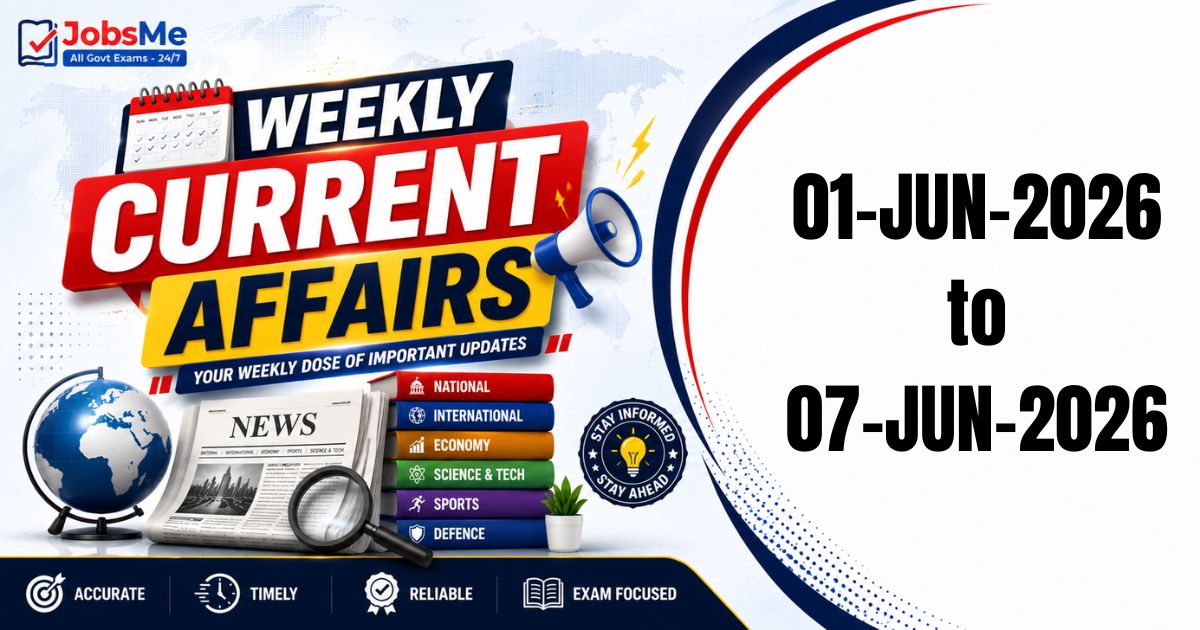
JobsMe's Weekly Current Affairs Posts are structured seven-day compilations of India's most important news, written with the depth and analytical clarity that competitive exam aspirants need. Each weekly post goes beyond a simple list of events - it presents the week's key developments with context, cross-topic linkages, and explicit exam relevance mapping. If you missed any days of daily reading, or simply want a structured weekly revision session, this archive is your most time-efficient current affairs resource. After finishing your weekly read, head to the weekly quiz archive to test your retention.
Why Weekly Compiled Notes Are Indispensable for Exam Preparation
Individual daily posts are excellent for staying updated in real time. But there is a specific kind of understanding that only comes from reading a week's worth of events together - the ability to identify trends, recurring themes, and the broader policy direction of the government. This is the level of understanding that earns marks in UPSC Mains, descriptive banking papers, and essay sections of State PSC exams.
Identify the Week's Most Important Themes
Not every news item from the week is equally important for exam preparation. Each weekly post on JobsMe does the editorial work for you - identifying which two or three developments from the week are the most significant for your exam syllabus, and presenting those with greater depth while covering the rest concisely. This saves hours of time compared to going through seven separate daily posts.
See How Events Evolve Over the Week
Many important developments do not happen in a single day. A Supreme Court judgement may be reported on Monday, debated on Tuesday, and have its implications analysed by Wednesday. A government scheme may be announced one day and clarified with funding details a few days later. The weekly post captures the complete picture of each such development, not just the first headline.
Connect Current Events to Static GK
Each weekly post includes contextual information that bridges current events to the static portions of the GS syllabus. For example, a weekly update on a new Ramsar site will connect to the Ramsar Convention framework from your Static GK preparation. A banking reform update will connect to RBI's constitutional mandate under Article 246. These connections are what turn current affairs preparation into genuine exam-readiness.
Structure of Each Weekly Post
Every weekly current affairs post on JobsMe follows a consistent structure designed to make revision efficient and effective.
Week Summary Header
Each post opens with a brief summary of the week's most significant theme - for example, "This week was dominated by geopolitical energy security concerns, governance reforms, and landmark judicial developments." This gives you immediate context before going into individual topics.
Category-Wise Coverage
The week's developments are then organised under clear category headings, making it easy to focus on the areas most relevant to your specific exam. Categories include:
- National Affairs & Governance - Parliament activity, government decisions, new schemes, policy changes, election commission notifications
- International Relations & Diplomacy - Bilateral visits, multilateral summits, trade agreements, foreign policy updates
- Economy, Finance & Banking - RBI decisions, fiscal policy, budget updates, SEBI, financial markets, economic data
- Science, Technology & Space - ISRO, DRDO, digital governance, AI policy, biotechnology, new discoveries
- Environment, Ecology & Climate - Conservation news, international agreements, pollution data, biodiversity, renewable energy
- Defence & Internal Security - Acquisitions, military exercises, border developments, defence technology
- Sports, Awards & Appointments - Tournament results, Indian sportspersons, Padma Awards, new appointments, international honours
- Important Days & Themes - National and international observances from the week
Exam Relevance Tags
Each section is tagged with the specific exam papers and GS topics it connects to (e.g., "Relevant for UPSC GS Paper II - Governance" or "High relevance for IBPS Banking Awareness"). This helps aspirants with targeted exam preparation quickly identify which topics to prioritise.
How to Use the Weekly Posts for Different Exam Goals
For UPSC Aspirants
UPSC requires both breadth and depth. Use the weekly post to ensure breadth - confirm that you have not missed any significant development from the week. For the two or three developments that are tagged as high relevance for GS Paper I, II, or III, go deeper by reading the corresponding daily post and cross-referencing with your static notes in Static GK.
For Mains preparation, focus specifically on the weekly post's analytical summaries, which model the kind of multi-dimensional understanding expected in 150-word and 250-word answers.
For SSC Aspirants
For SSC CGL, CHSL, and other SSC exams, the weekly post gives you exactly the right granularity - detailed enough to be exam-ready, concise enough to be manageable. Focus on the Sports, Awards, Appointments, Science, and National Affairs sections, which are most heavily tested in SSC papers. Complement your weekly reading with the weekly quiz for pattern-based MCQ practice.
For Banking Aspirants
For IBPS PO, SBI PO, RBI Grade B, and other banking exams, the Economy, Finance & Banking section of each weekly post is the most important. Pay close attention to RBI decisions, SEBI circulars, government economic schemes, international financial organisations, and India's GDP and inflation data. The daily current affairs posts provide more granular detail on banking-specific topics when needed.
For Railway and Defence Aspirants
RRB NTPC and RRB Group D aspirants should focus on Science & Technology, National Affairs, Appointments, and Sports sections. NDA and CDS aspirants should additionally focus on International Relations and Defence sections, which are consistently tested in those papers.
For State PSC Aspirants
In addition to the national coverage, note any state-specific developments in the weekly post. Cross-reference with your state's current affairs sources for full coverage of state-level news. The monthly current affairs posts are especially useful for State PSC aspirants who need to revise a larger block of time efficiently.

 Study Note