Introduction
JobsMe's Banking Awareness posts are topic-wise study notes written specifically for IBPS, SBI, RBI, NABARD, LIC, and all other banking and insurance examinations. Each post covers one Banking Awareness topic in full - with clear definitions, structured tables, exam-pattern framing, previous year question (PYQ) examples, and memory aids to help you retain and recall facts under exam conditions. After reading any post, head to the Banking Awareness quiz archive to test your retention with free interactive MCQs. Track your progress with every attempt when logged in.
Want to combine your Banking Awareness preparation with current developments? Pair these notes with daily current affairs and monthly current affairs for complete Financial Awareness preparation.
Why Banking Awareness Notes Matter More Than You Think
Banking Awareness is the most predictable scoring section in any bank exam. Unlike reasoning or quantitative aptitude - where question difficulty varies significantly - Banking Awareness questions are almost entirely factual. The RBI's repo rate, the founding year of NABARD, the full form of MCLR, the headquarters of ADB, the provisions of SARFAESI Act - these are fixed answers that do not change based on how the question is worded. Every mark you invest in Banking Awareness preparation has a predictable, high return on exam day.
The challenge is coverage. The Banking Awareness syllabus is extensive, spanning dozens of distinct topics. Without well-organised notes, aspirants either miss critical topics or spend more time than necessary. JobsMe's Banking Awareness posts solve both problems - each is a standalone, self-sufficient study resource for its topic, with nothing important left out and nothing irrelevant included.
Written for Exam Performance, Not General Reading
Each post opens with how questions from that topic are typically asked in competitive papers - whether as direct fact recall, match the following, or multi-statement correct/incorrect format. This sets the right exam mindset before you read a single fact. You will not just learn that the Repo Rate is the rate at which RBI lends to commercial banks - you will understand how a question on the Repo Rate is likely to be framed in IBPS PO Mains, and what common wrong-option traps to watch out for.
PYQ Pattern Analysis in Every Post
Each post includes examples of how that topic has been asked in previous year papers of IBPS PO, IBPS Clerk, SBI PO, and RBI Grade B. This shows you which sub-topics carry the most exam weight and where to focus your memorisation effort. Aspirants who study with PYQ awareness score significantly higher than those who prepare without knowing question patterns.
Memory Aids and Quick Revision Tables
Every Banking Awareness post includes structured tables for quick revision - RBI rate tables, bank headquarters lists, abbreviation full-form grids, act-provision summaries, and scheme-objective matrices. These tables are designed for screenshot and save - ideal for last-minute revision on the day before your exam.
Complete Topic Coverage
Foundation Topics (Start Here)
These are the core topics tested in every banking exam, regardless of level:
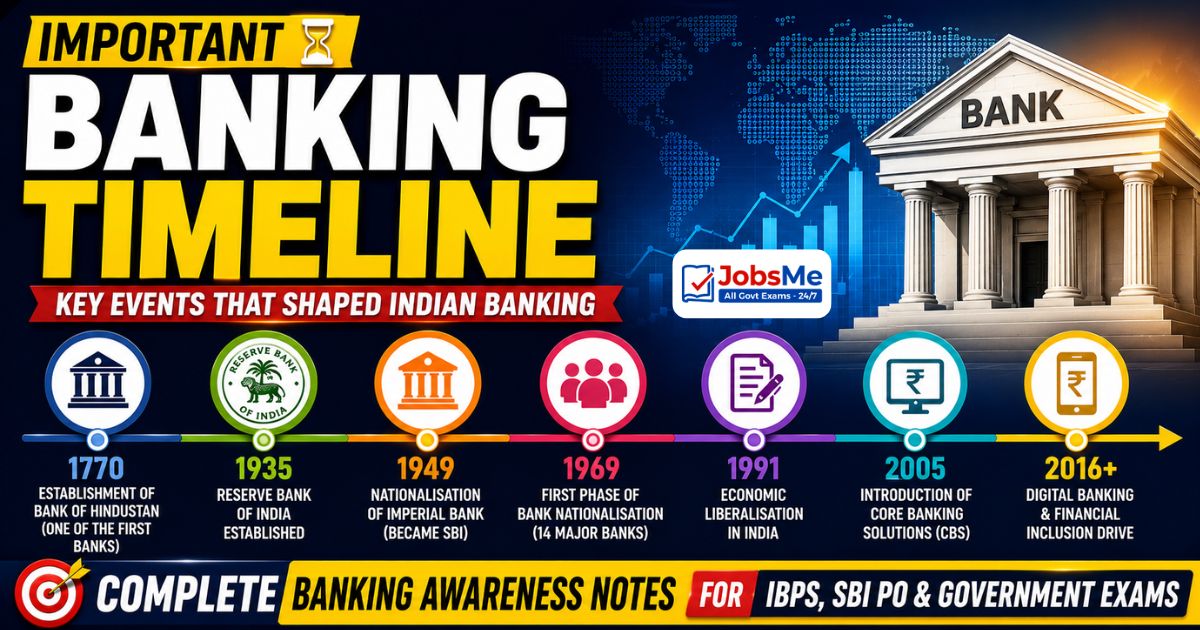
- History of Banking in India - Presidency banks, nationalisation (1969 and 1980), formation of SBI, cooperative banks, current banking structure
- Reserve Bank of India - Establishment, structure, functions, departments, Mint Street, RBI Governor
- Monetary Policy and MPC - Repo Rate, Reverse Repo Rate, CRR, SLR, MSF, Bank Rate, OMOs, LAF, current rates
- Types of Banks - Commercial banks (public and private), RRBs, cooperative banks, payment banks, small finance banks
- Banking Regulation Act 1949 - Key provisions, applicability, schedule banks vs non-schedule banks
Financial Institutions
- NABARD - Functions, establishment, refinancing role, RIDF, financial inclusion mandate
- SIDBI - Small industry financing, MUDRA loans, relationship with RBI
- NHB (National Housing Bank) - Housing finance regulation, refinancing
- EXIM Bank - Export-import financing, establishment, key schemes
- SEBI - Capital market regulation, functions, SEBI Act 1992, recent circulars
- IRDAI - Insurance regulation, types of insurance, composite licensing
- PFRDA - Pension regulation, NPS, APY
Banking Products and Services
- Types of Accounts - Savings, current, FD, RD, NRE, NRO, FCNR, demat accounts
- Negotiable Instruments - Cheques, demand drafts, promissory notes, bills of exchange - provisions of the Negotiable Instruments Act 1881
- Payment Systems - UPI, NEFT, RTGS, IMPS, NACH, BBPS, Fastag - mechanisms, timings, limits
- Loan Products - Home loans, personal loans, MUDRA, gold loans, crop loans, KCC - terms and conditions
Financial Inclusion
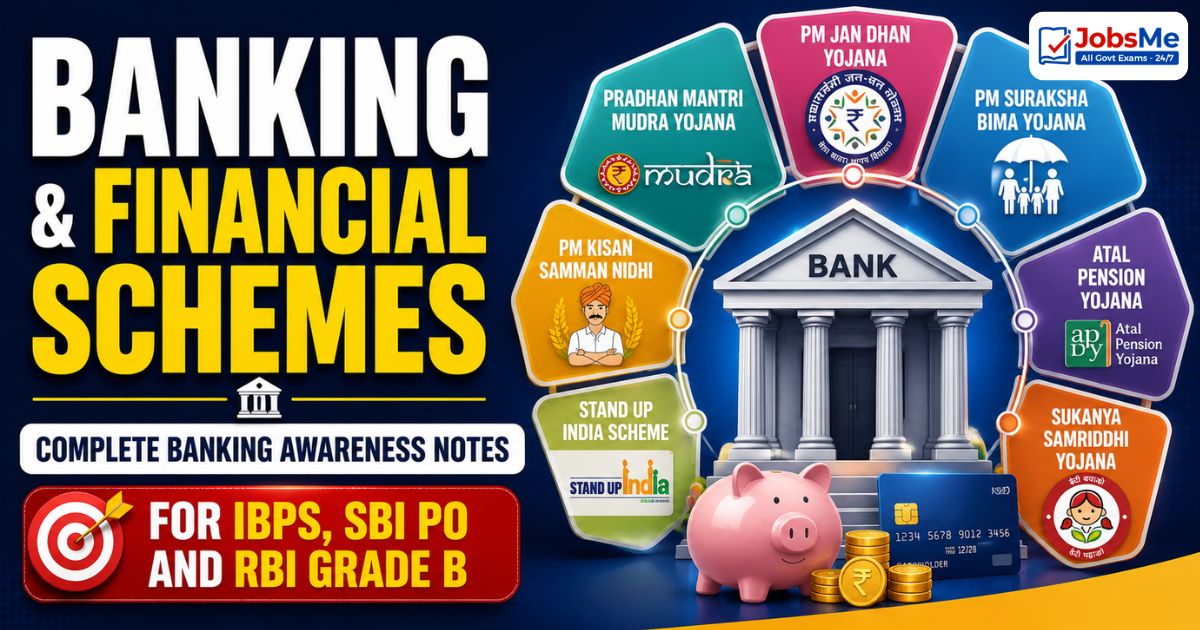
- PM Jan Dhan Yojana (PMJDY) - Objectives, account features, overdraft facility, RuPay card
- MUDRA Scheme - Shishu, Kishore, Tarun categories, eligible borrowers, disbursement data
- PM SVANidhi, Stand-Up India, Startup India - Banking linkages and financial support mechanisms
- Business Correspondents - Role, eligibility, services, importance for rural banking
- Financial Inclusion Index (FI Index) - Methodology, current value, RBI publication
Banking Regulation and Compliance
- SARFAESI Act 2002 - Secured creditors, enforcement of security interest, ARCs
- IBC 2016 (Insolvency and Bankruptcy Code) - Application to banks, NCLT, resolution timeline
- PMLA 2002 (Prevention of Money Laundering Act) - KYC norms, suspicious transaction reporting, FIU-IND
- Basel Norms (I, II, III) - Capital adequacy ratio, Tier 1/Tier 2 capital, LCR, NSFR
- NPA and Bad Loans - Definitions (substandard, doubtful, loss assets), NARCL, IBC resolution, provisioning norms
International Banking and Finance
- International Monetary Fund (IMF) - Functions, SDR, India's quota, recent developments
- World Bank Group - IBRD, IDA, IFC, MIGA - differences and India's borrowings
- Asian Development Bank (ADB) - Headquarters, membership, India and ADB
- New Development Bank (NDB) - BRICS bank, India's role, recent projects
- Bank for International Settlements (BIS) - Role in Basel norms, headquarters
Banking Abbreviations (High Frequency)
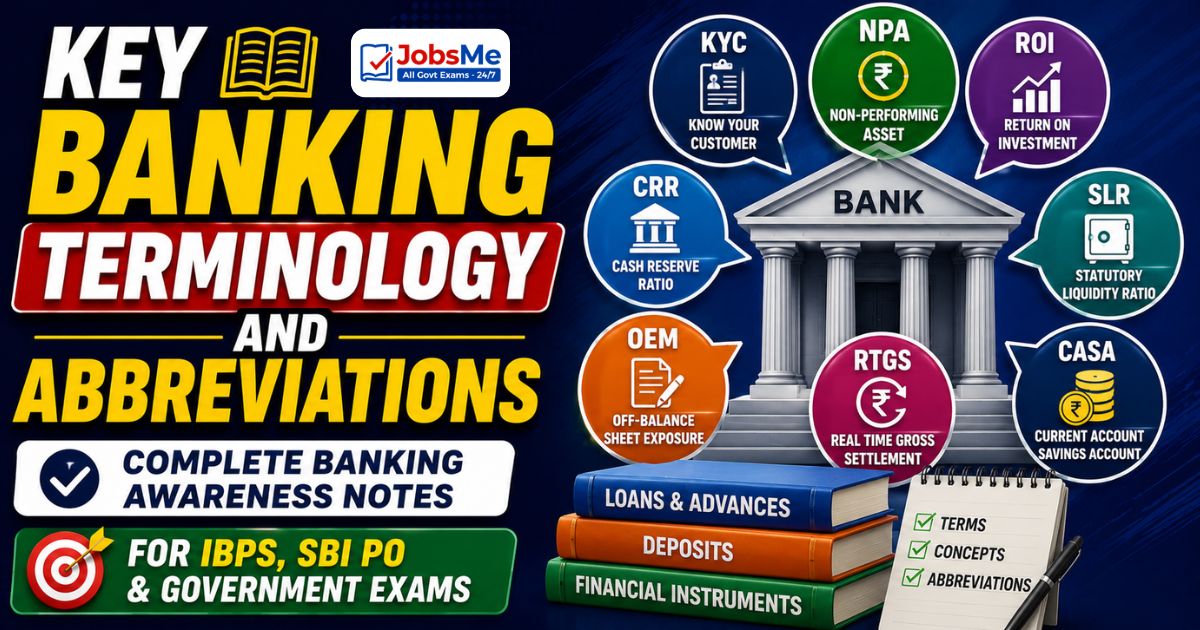
A dedicated post covering 200+ important banking abbreviations - NPA, MCLR, CRAR, PCFC, KYC, AML, RTGS, NEFT, IMPS, UPI, NACH, CIBIL, CERSAI, SARFAESI, IBC, NCLT, NBFC, MFI, SHG, and more. One of the highest-frequency direct question types in all banking exams.
How to Read Banking Awareness Posts Effectively
Prioritise by Exam
Before starting, check your target exam's previous year papers to identify which Banking Awareness sub-topics appear most. IBPS Clerk heavily tests payment systems and financial inclusion. RBI Grade B tests deeper monetary policy and capital markets. SBI PO Mains tests a broad mix with some current affairs overlay. Matching your reading priority to your exam saves time and sharpens focus.
Table-First Reading
In each post, go to the summary table or quick-revision chart first. This gives you the complete scope of the topic in 2-3 minutes. Then read the narrative content for context and understanding. This top-down approach is faster and sets up better retention than linear top-to-bottom reading.
Note the Current Rates
For monetary policy posts especially, the current RBI rates (Repo Rate, CRR, SLR) as of the most recent MPC meeting are always included. These change periodically - always use the most recent figures from JobsMe or current affairs updates.
Always Follow with the Quiz
After reading, attempt the corresponding Banking Awareness quiz immediately. Same-session testing converts short-term reading comprehension into long-term exam memory. The quiz explanations also teach you facts you may have skimmed past.

 Study Note